

Na behandeling
-
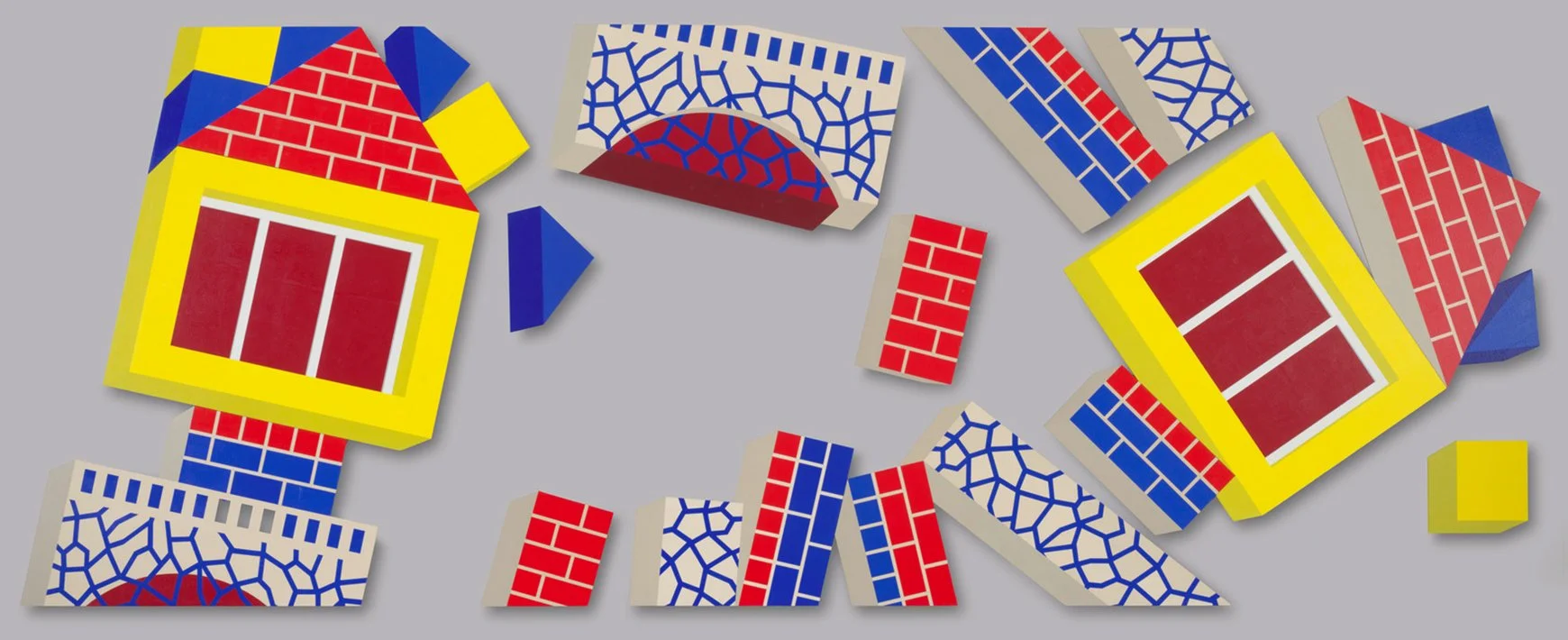
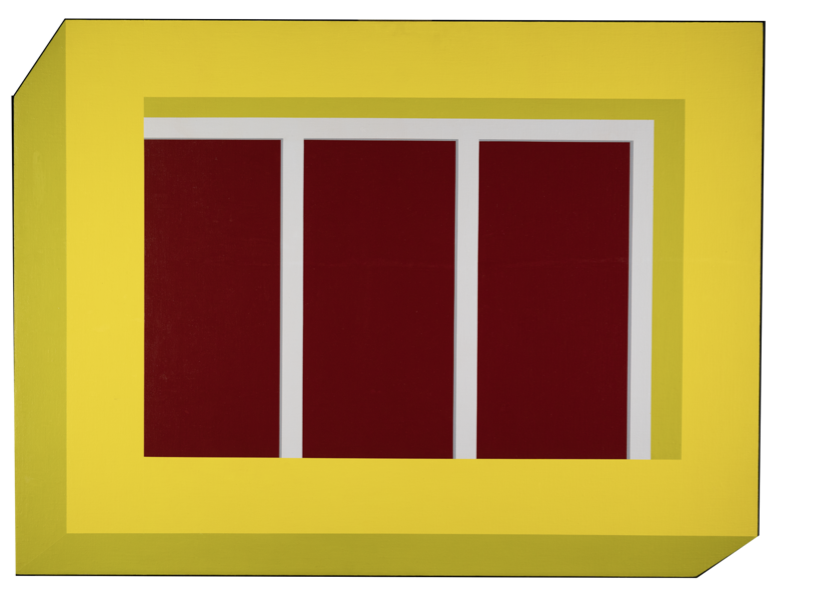
Elementen van Huizen
Lode Pemmelaar
1978-80
acryl op doek op multiplex
90 x 50 x 1,5 cm
Rijksdienst voor het Cultureel Erfgoed
-
Structureel stabiel
Oppervlaktevuil
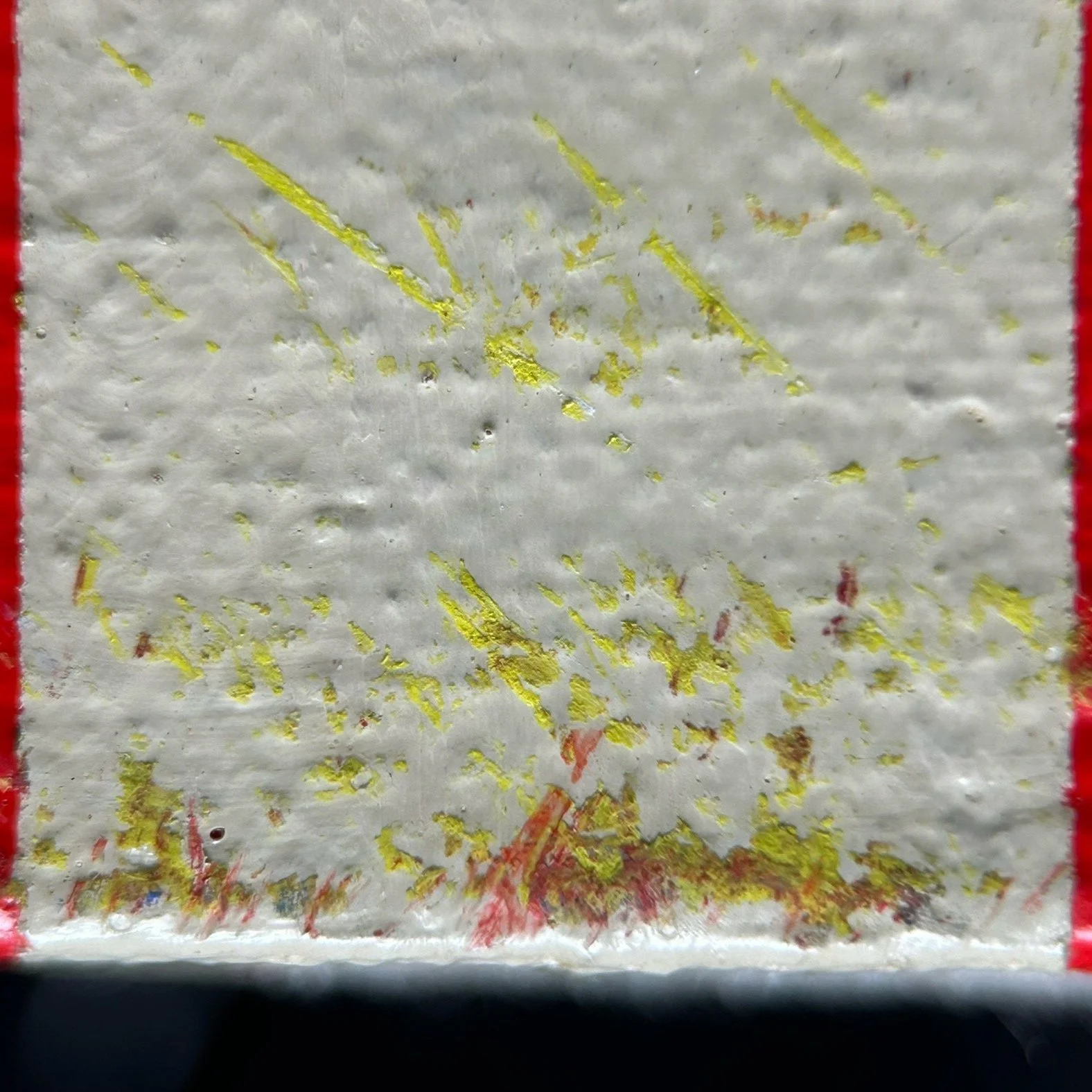
Schuursporen
Krassen
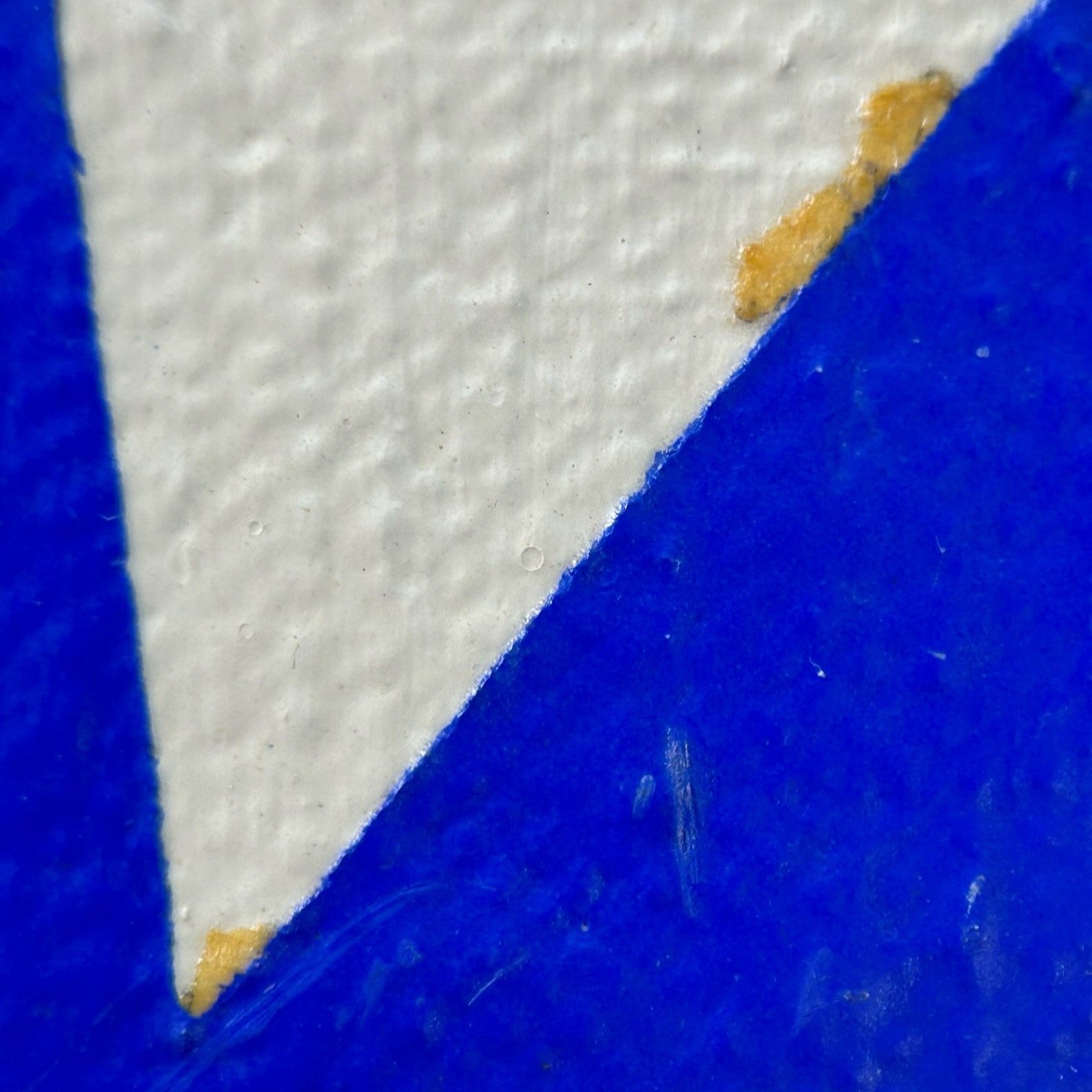
Kleine lacunes
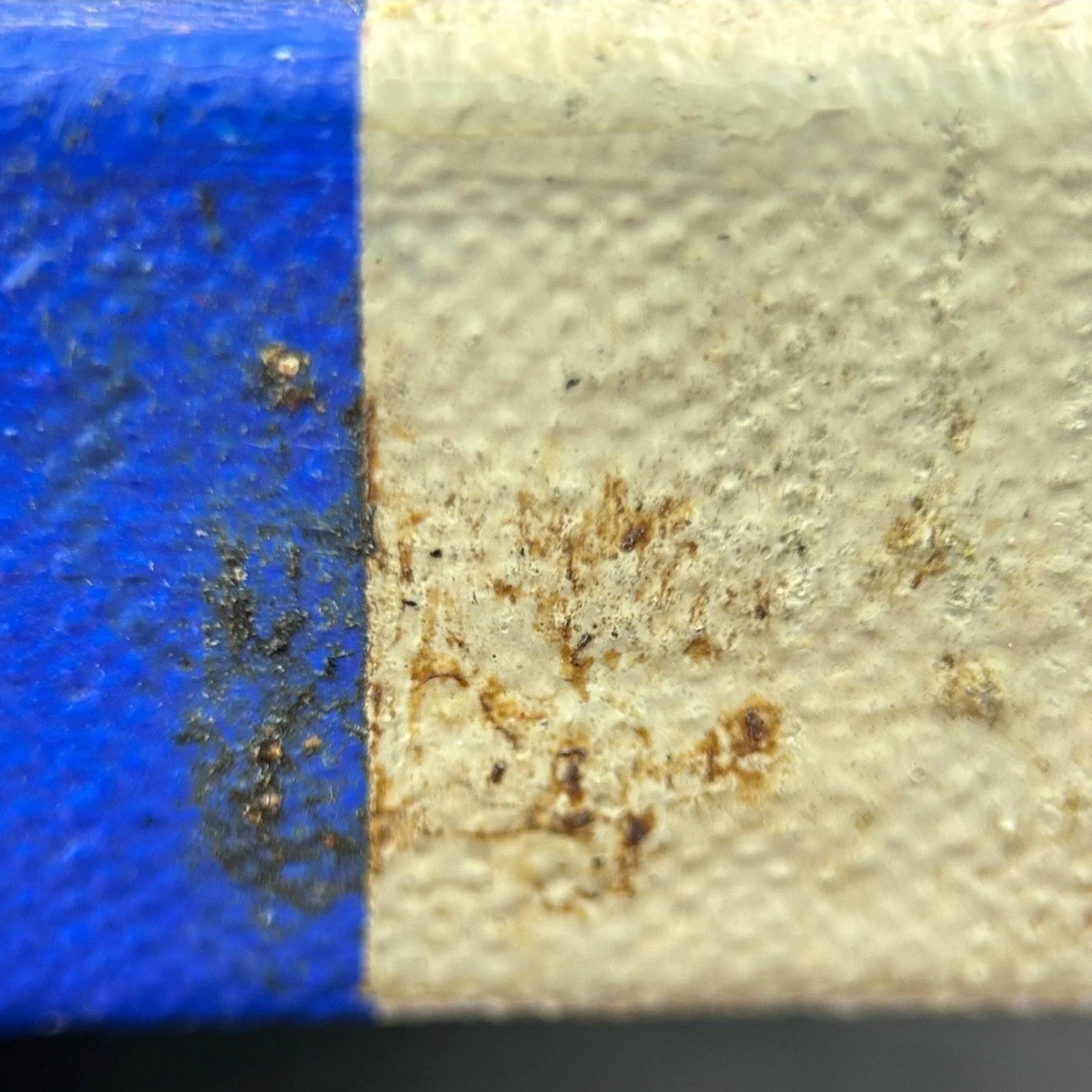
Koffievlekken
Schoenafdruk
-
Doel het versterken van de visuele samenhang door storende elementen te verminderen en de kleurkracht te herstellen
1. Verwijderen van oppervlaktevuil
Oppervlaktevuil maakt de kleuren doffer en vermindert de visuele impact van het werk. Bovendien kan opgehoopt vuil vocht en verontreinigingen aantrekken, wat op de lange termijn de degradatie van het schilderij versnelt. Door het oppervlak te reinigen met droge en natte methoden worden deze lagen vuil verwijderd, waardoor het schilderij weer dichter bij zijn oorspronkelijke uitstraling komt.
2. Verwijderen van schuursporen
De schuursporen bestaan uit dezelfde verf als die waarmee de panelen zijn beschilderd en zijn ontstaan doordat panelen tijdens opslag of transport tegen elkaar schuurden. Deze sporen worden verwijderd met een zo min mogelijk polair oplosmiddel, om te voorkomen dat de onderliggende vernislaag wordt aangetast.
3. Vullen
Om een gelijkmatig oppervlak te creëren voor de retouches, is het nodig om de lacunes op te vullen.
4. Retoucheren
De vullingen worden geretoucheerd om de eenheid in kleur en compositie te herstellen.
5. Reconstructie van de ontbrekende panelen
Twee van de veertien panelen zijn verloren gegaan. Er zijn daarom twee reconstructies van deze panelen gemaakt door de RCE, gebaseerd op archiefbeelden, zodat het geheel weer kan worden getoond zoals de kunstenaar het oorspronkelijk bedoelde.
Alle bevindingen van het technische onderzoek en de resultaten van de behandeling worden zorgvuldig en volledig gedocumenteerd.
-
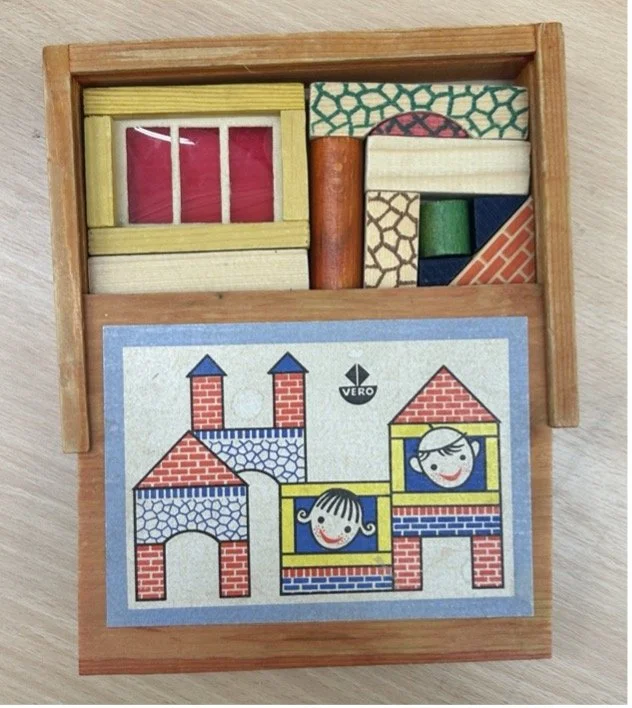
![VERO houten bouwblokken uit de jaren '70]()
VERO houten bouwblokken uit de jaren '70
-
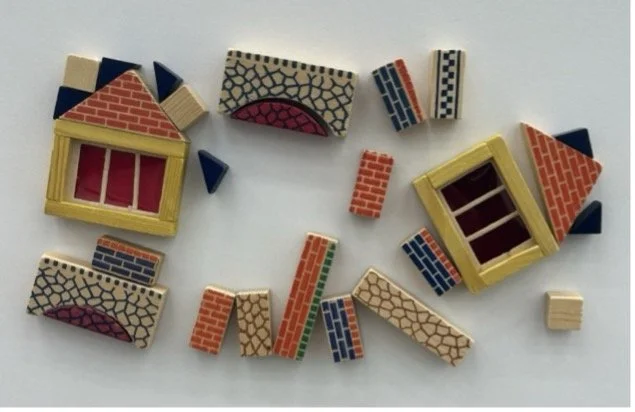
![Wooden building blocks from VERO 1970s]()
VERO houten bouwblokken uit de jaren '70
De blokken zijn neergelegd zoals in de compositie van Elementen van Huizen
-
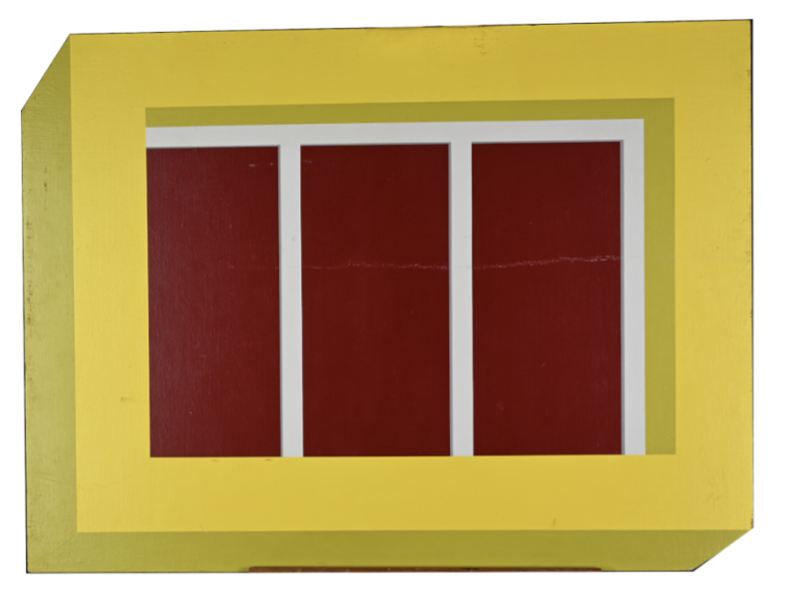
![Panel J before treatment]()
Paneel J voor behandeling
-
![Panel J after treatment]()
Paneel J na behandeling
-
![tape residue]()
Tape residu
Resten van schilderstape, die door de kunstenaar tijdens het maakproces is gebruikt, zijn op meerdere panelen aangetroffen.
-
![Verf lacunes]()
Verf lacunes
-
![stain]()
Vlek
-
![scuff marks]()
Schuursporen

Highlights
Verwijderen van oppervlaktevuil
Voordat een reiniging veilig kan worden uitgevoerd, is het belangrijk om te weten hoe zuur of basisch het oppervlak is. Sommige reinigingsmiddelen kunnen namelijk reageren met stoffen die zich op het schilderij hebben opgehoopt, wat ongewenste chemische reacties kan veroorzaken. Door de pH van het oppervlak te meten, kan een reinigingsoplossing worden gekozen die goed aansluit bij de conditie van het schilderij.
Na vele testjes is ervoor gekozen het oppervlaktevuil te verwijderen met een oplossing van EDTA in gedestilleerd water. EDTA wordt in de restauratie gebruikt vanwege het vermogen om metaalionen te binden (voorkomend in vuil), de goede pH‑buffering en de oplosbaarheid in water. Hierdoor kan vuil effectief worden losgemaakt zonder de verflaag te belasten.

Oppervlaktevuil verwijderd van paneel A
Verwijderen van schuursporen
De schuursporen zijn verwijderd met een mengsel van isopropanol en iso-octaan in een verhouding van 1 op 9, dat voorzichtig met een wattenstaafje is gedept op het oppervlak. Daarna zijn de resterende verfresten van de schuursporen mechanisch weggehaald met een scalpel, onder vergroting voor maximale controle.
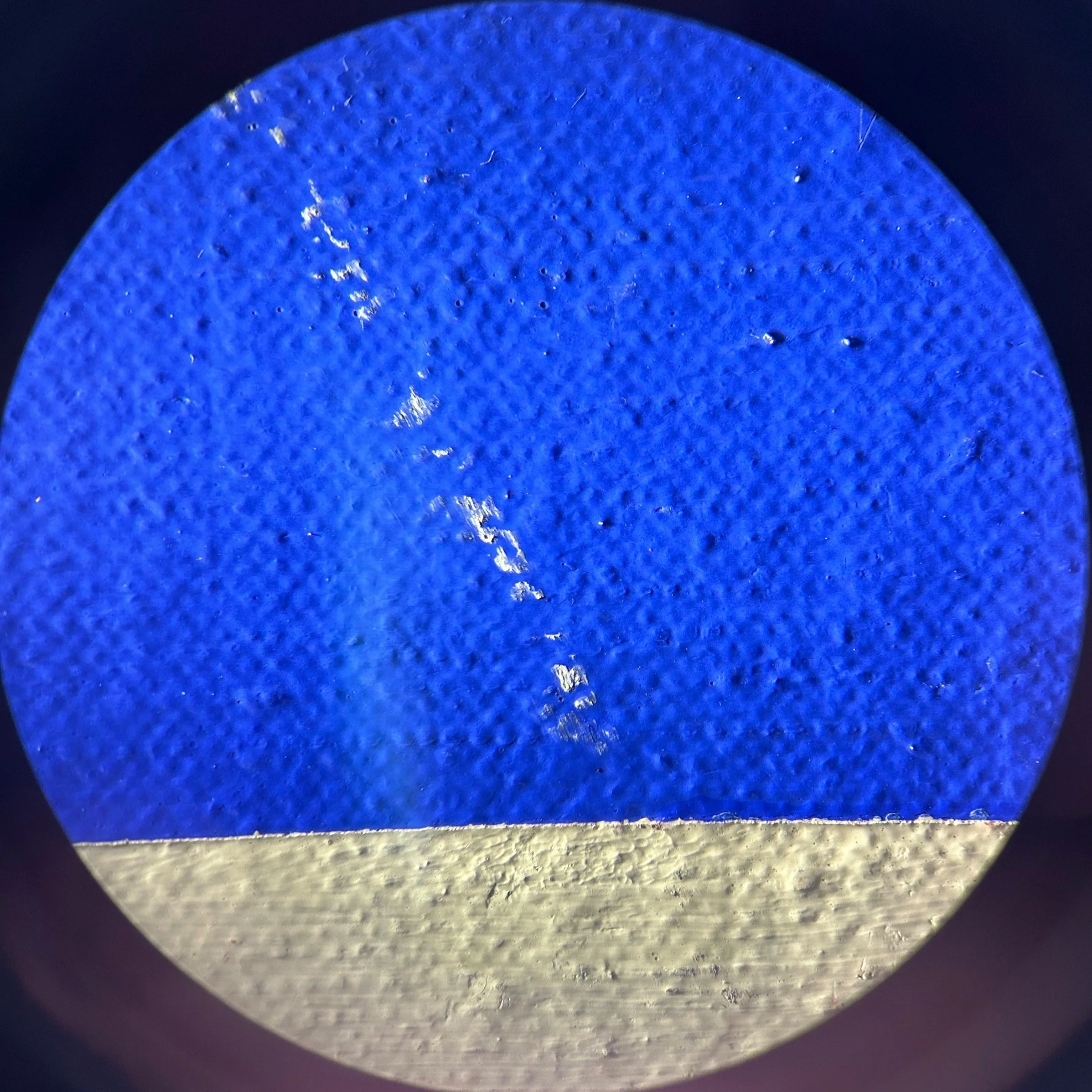
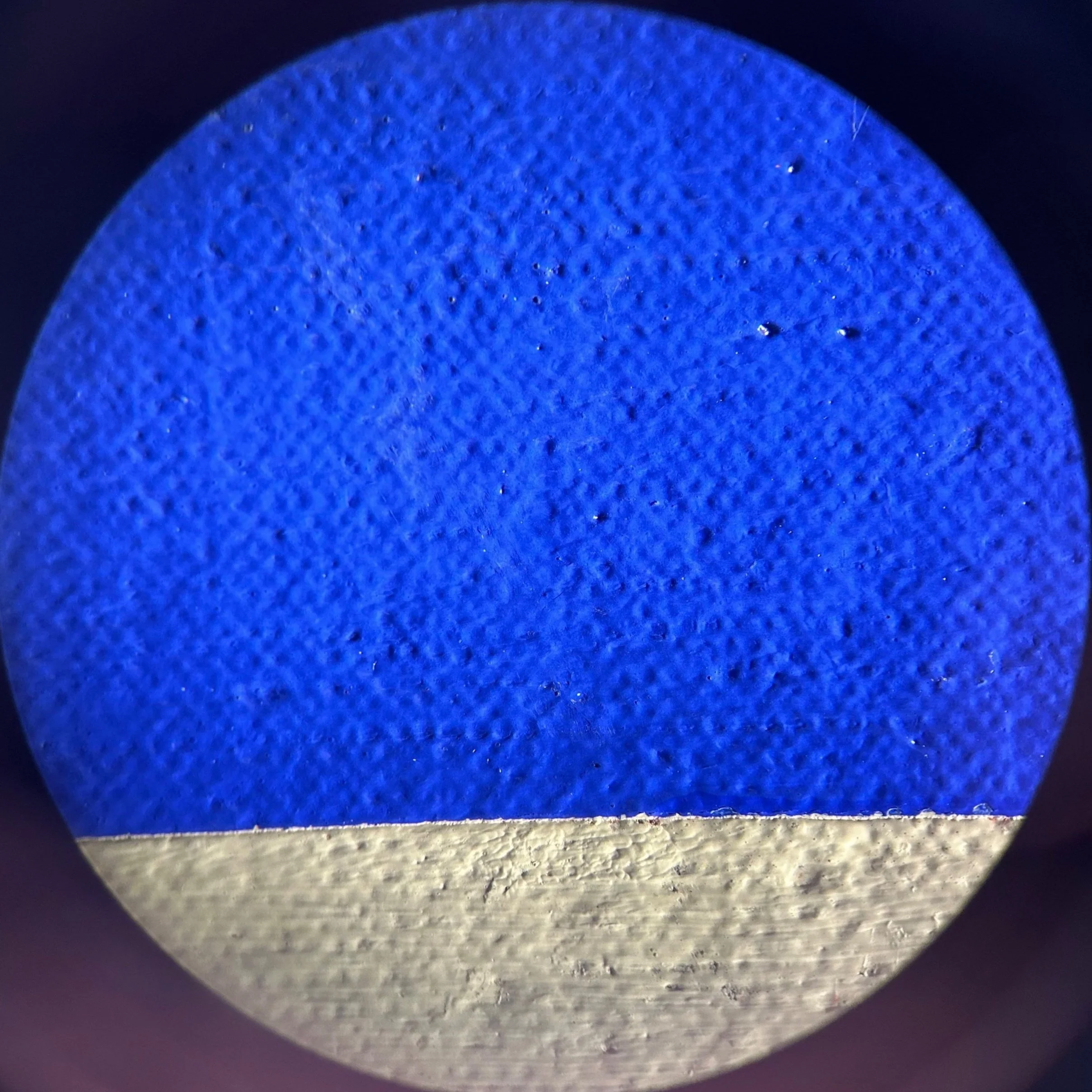
Microscopische afbeelding van paneel A in zichtbaar licht. Links: vóór het verwijderen van de schuursporen, rechts: na het verwijderen van de schuursporen.