

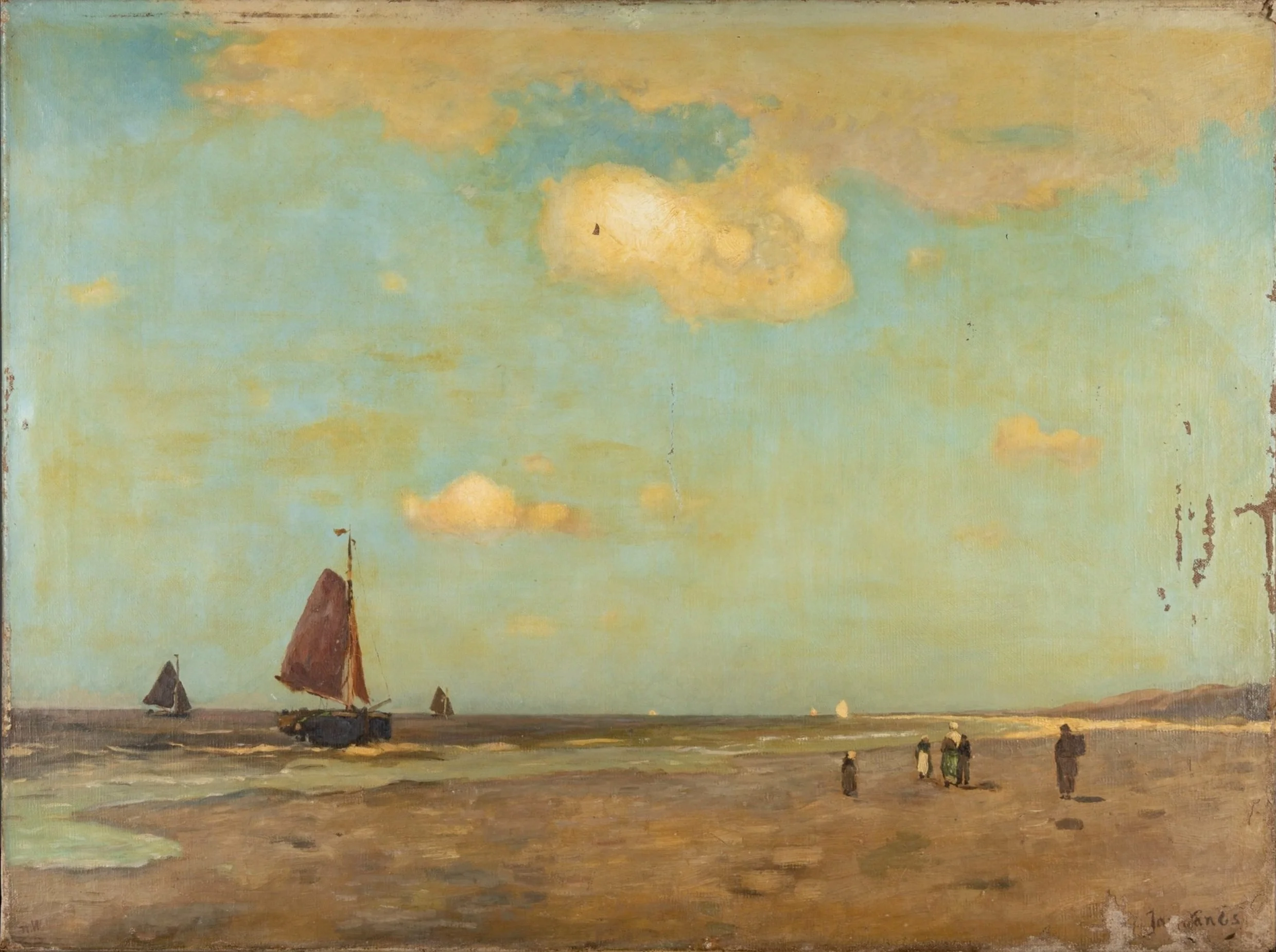
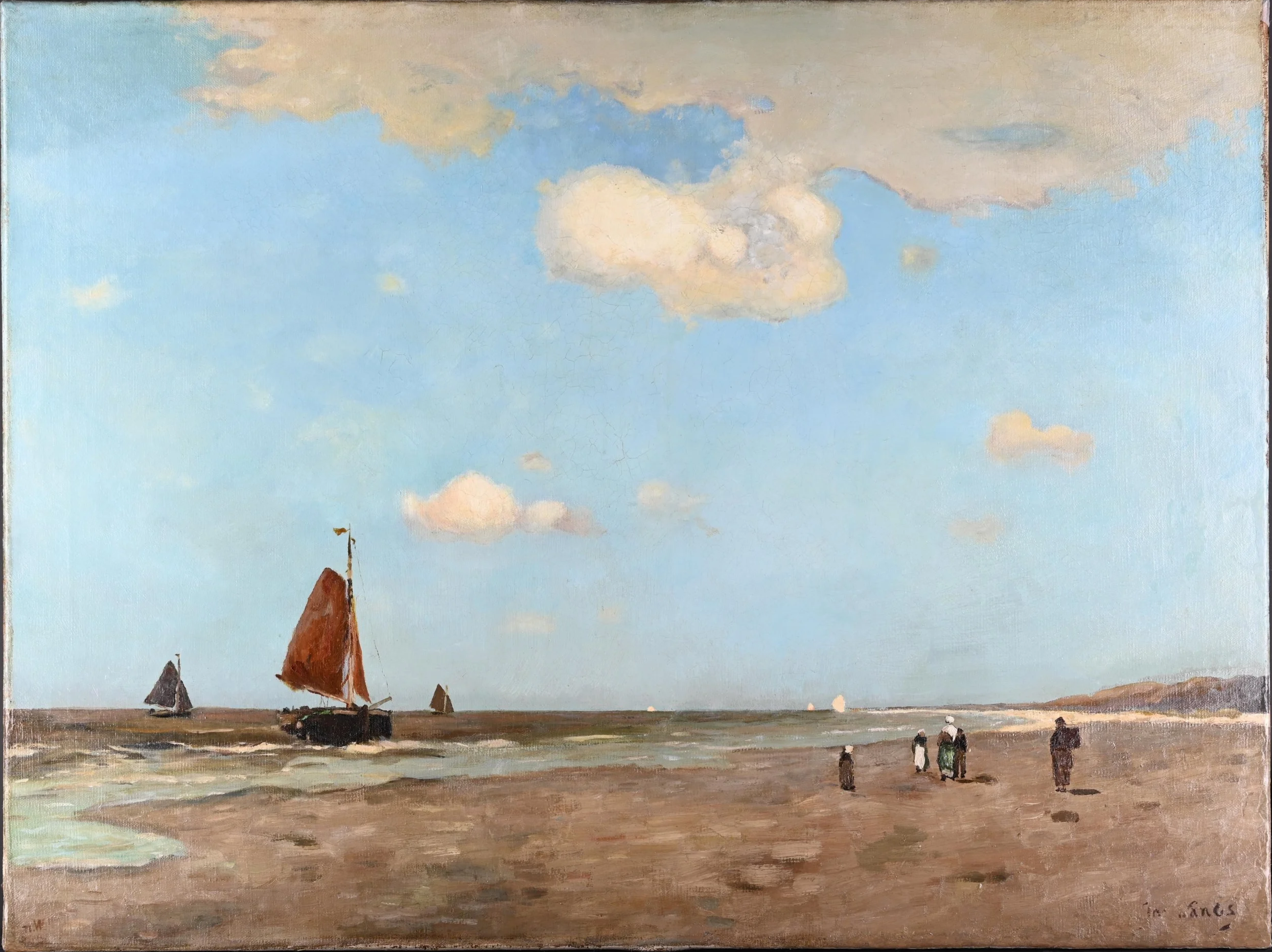
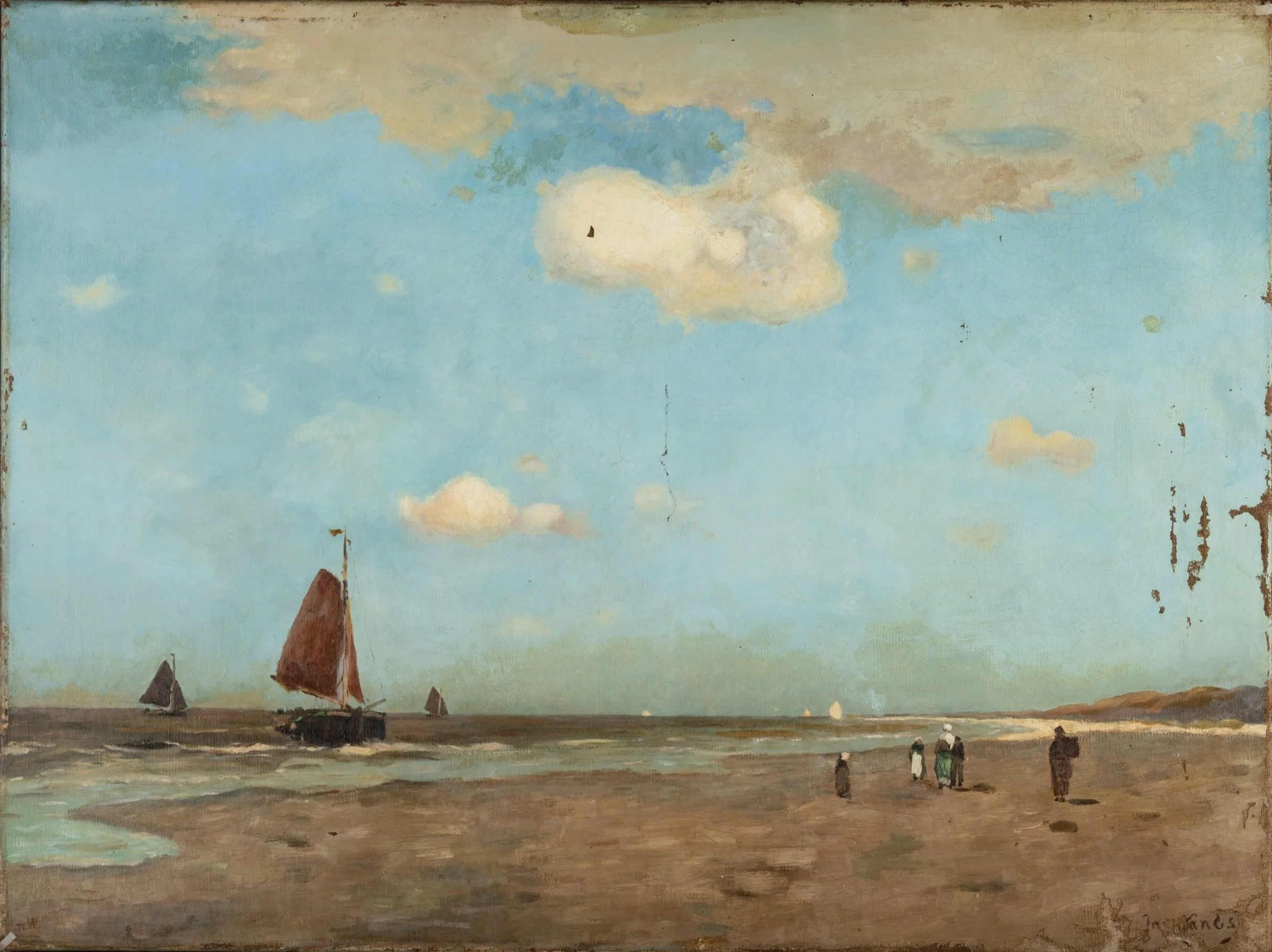
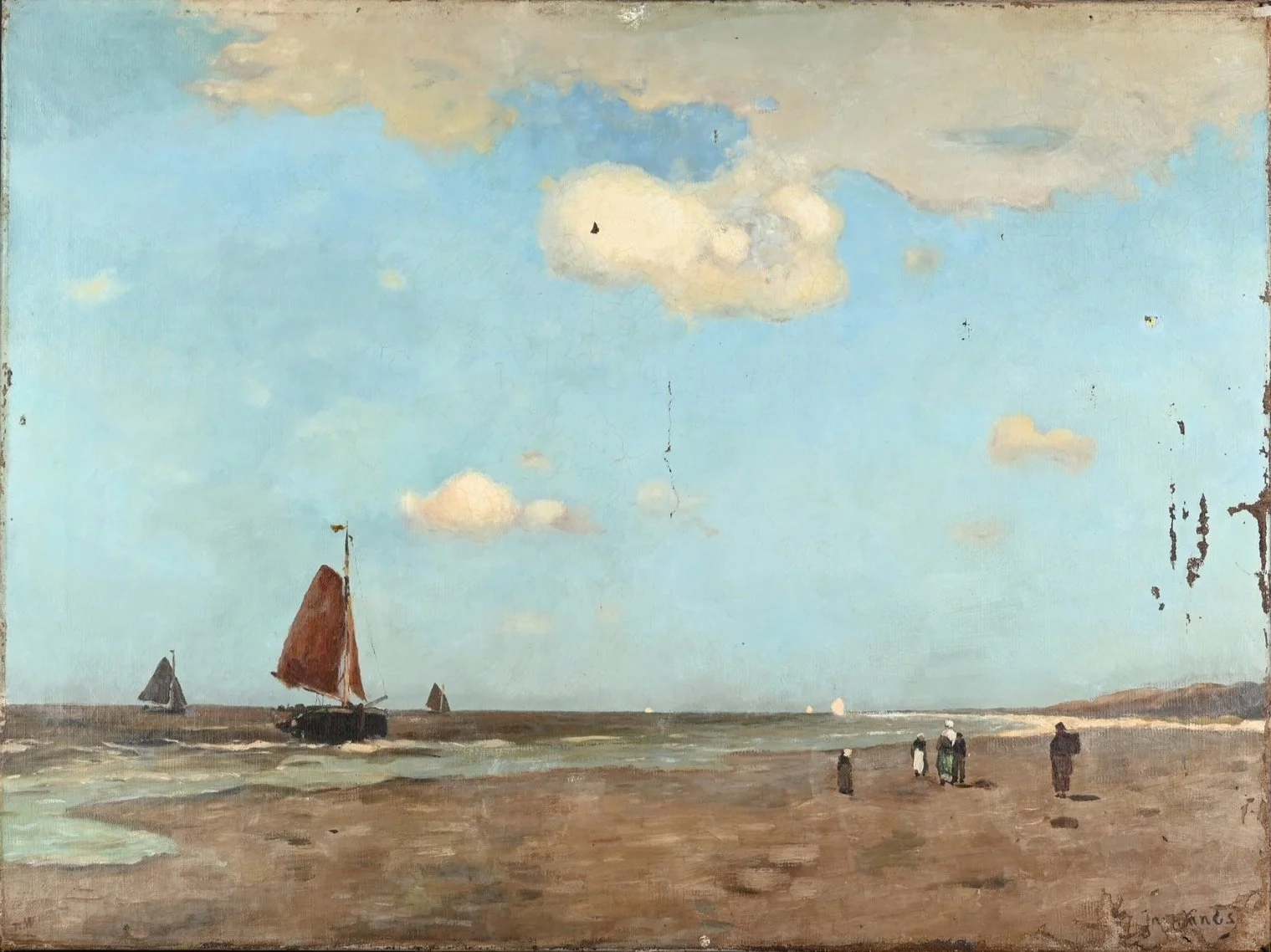
Voor behandeling
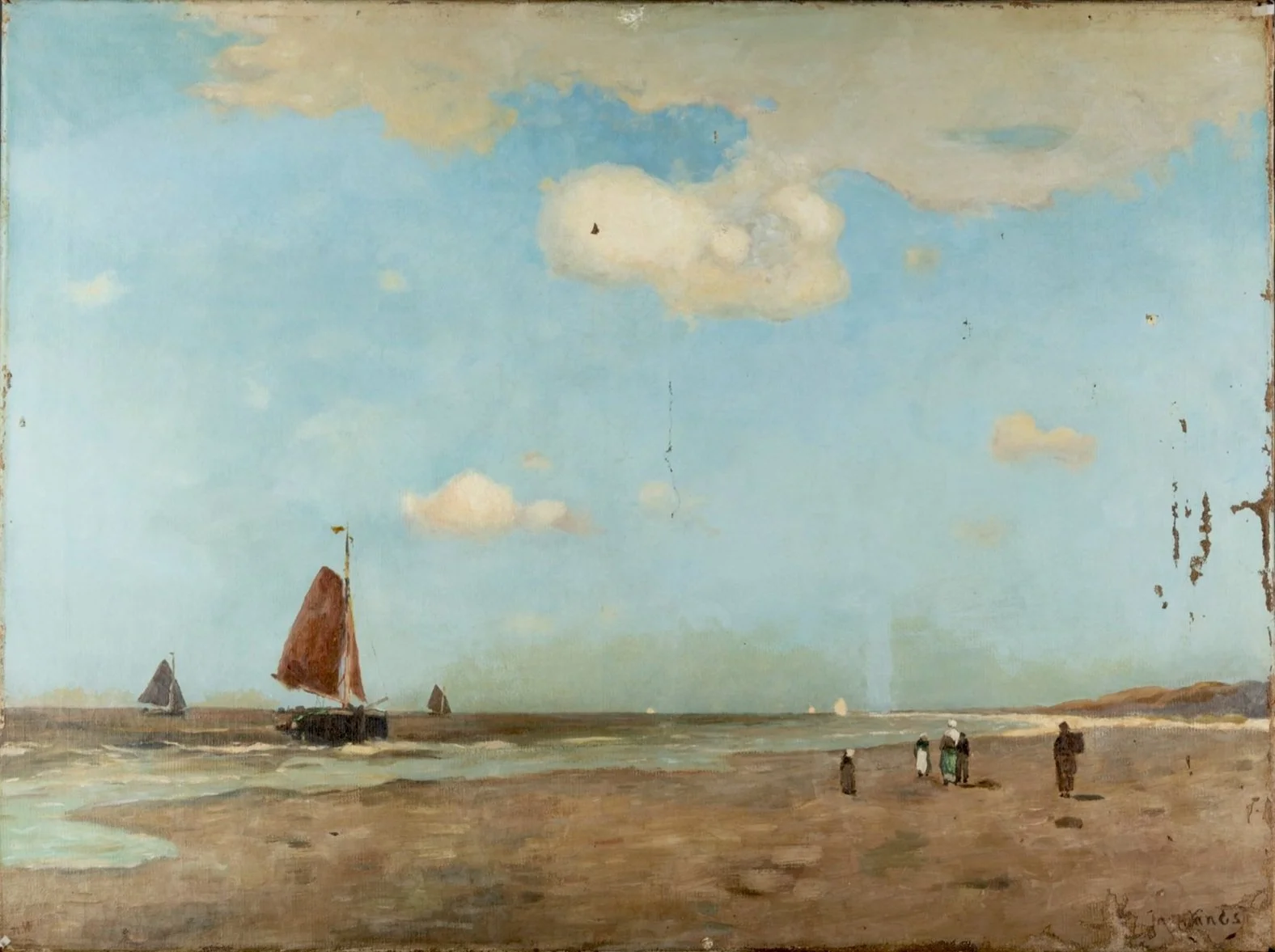
Na behandeling
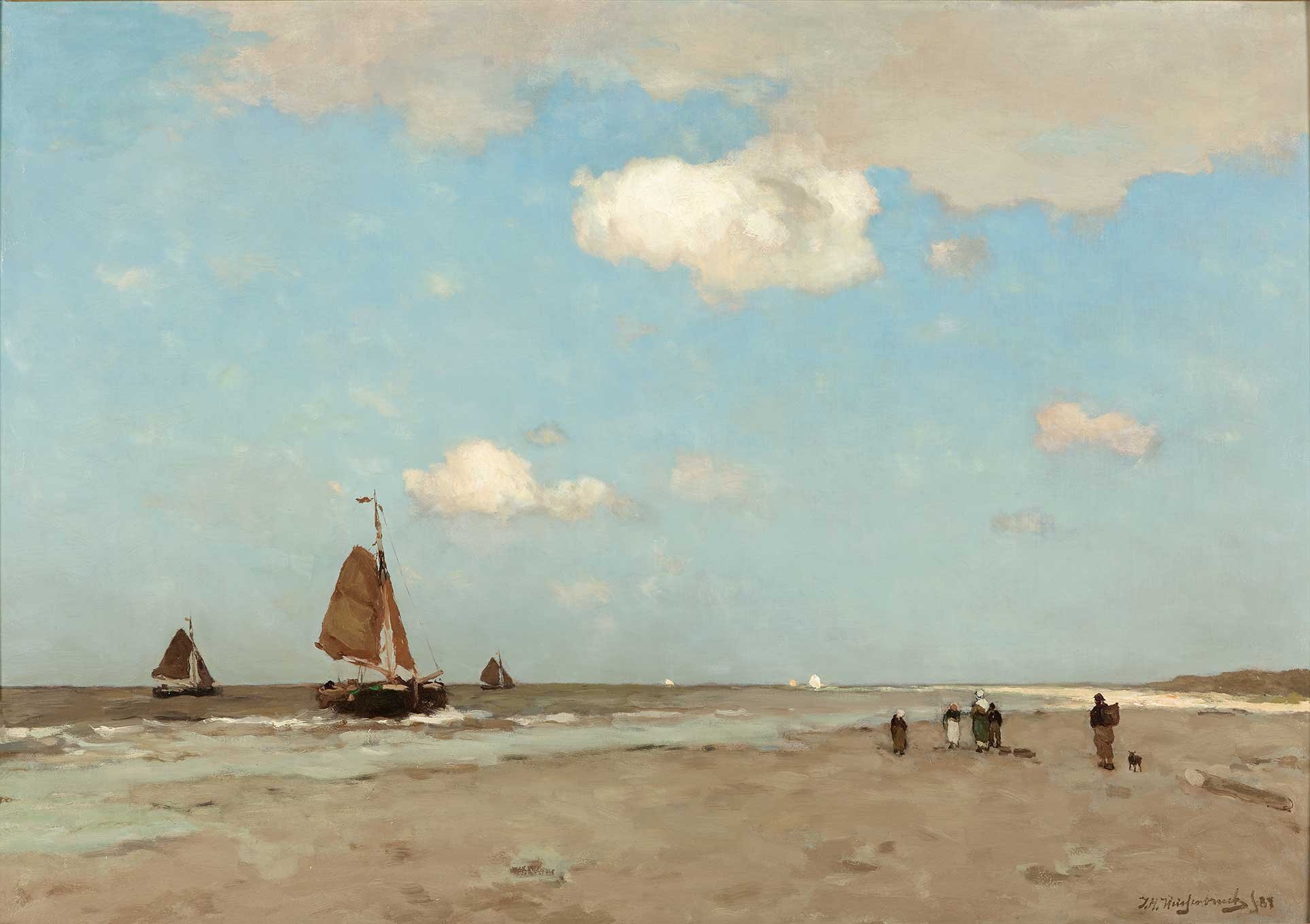
Originele schilderij van Jan Hendrik Weissenbruch. Strandgezicht, 1887., olieverf op doek, 72.8 x 102.9 cm. Bron: Kunstmuseum, Den Haag.
-
Strandgezicht
(dit schilderij is een kopie van Strandgezicht (1887) van Jan Hendrik Weissenbruch, op dit moment te zien in het Kunstmuseum, Den Haag)
kunstenaar onbekend, vermoedelijk Johannes van Es
na 1887
olieverf op doek
80 x 60 x 2 cm
Rijksdienst voor het Cultureel Erfgoed
-
Fragiel doek langs de omslagranden
Kleine gaatjes in het doek
Lacunes in grond- en verflagen
Verkleurde retouches
Grote zones met overschildering
Vergeelde, ongelijkmatige vernislaag
-
Doel het aanpakken van structurele problemen om verdere schade aan doek en verflaag te voorkomen, en het versterken van de visuele samenhang door storende elementen te verminderen en de kleurkracht te herstellen
1. Verwijderen van de vernislaag
De vernislaag wordt verwijderd om de leesbaarheid van de compositie te verbeteren en de kleurhelderheid te vergroten. Dit gebeurt niet alleen om esthetische redenen: tijdige verwijdering voorkomt dat de vernis onoplosbaar wordt en in de toekomst moeilijker te verwijderen is.
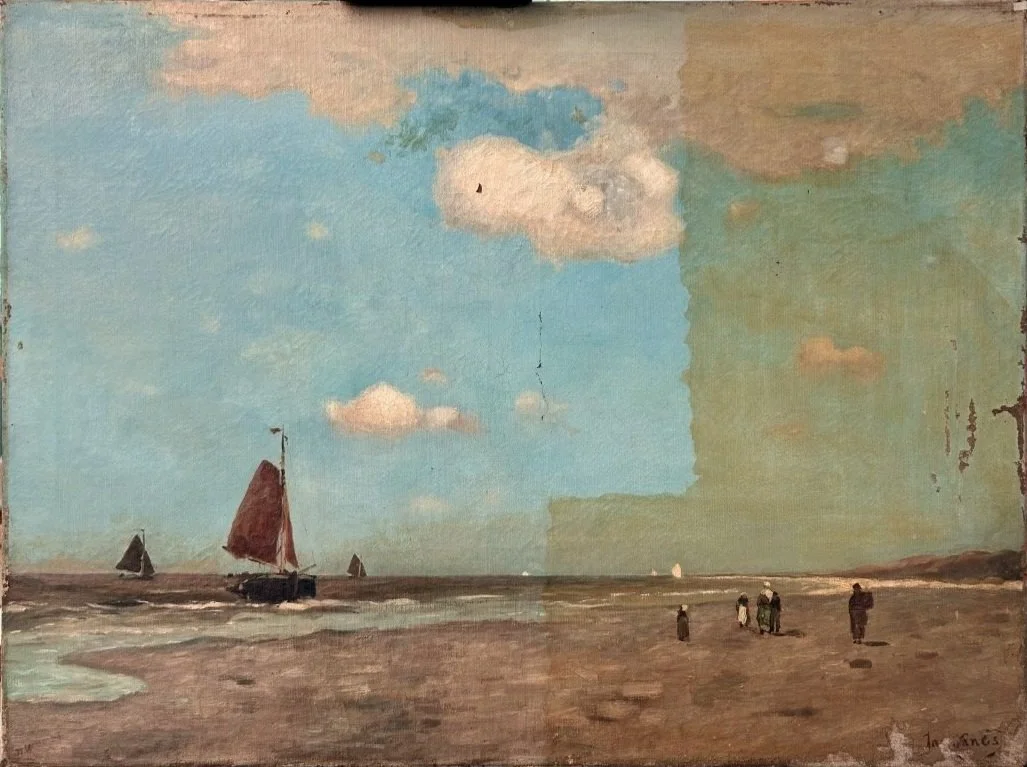
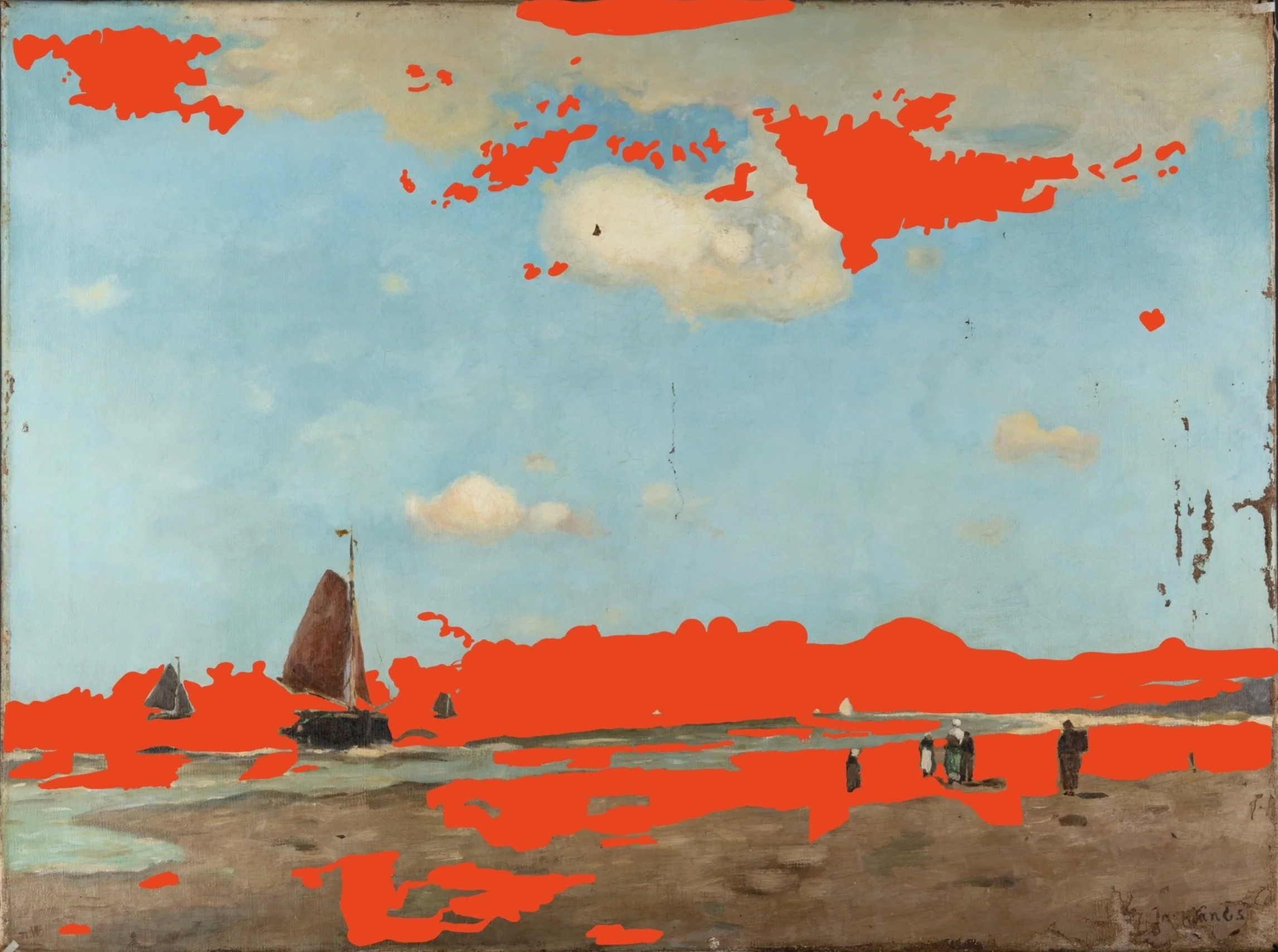
2. Verwijderen van retouches en overschilderingen
De verkleurde retouches worden verwijderd. Ook de overschilderingen in de wolken en langs de horizon worden weggehaald, om de volgende redenen:
Ze bedekken verouderingscraquele en vullingen uit een eerdere behandeling en zijn dus geen toevoegingen van de kunstenaar
Ze overschilderen een groot deel van de originele verflaag, die zich in relatief goede staat bevindt
Ze zijn zelf gedegradeerd
Ze verstoren het beeld
Ze kunnen veilig worden verwijderd
Het verwijderen van deze storende overschilderingen herstelt de integriteit van het werk als een bedoelde studie naar Weissenbruch.
3. Tussenvernis
Een tussenvernis wordt aangebracht om de originele verflaag te isoleren van de retouches. Deze laag verdiept bovendien de kleurverzadiging, wat essentieel is om een goede kleuraansluiting tussen retouches en origineel te bereiken.
4. Vullen
Om een egaal oppervlak te creëren voor de retouches, worden de lacunes gevuld. Omdat op veel plaatsen het kale doek zichtbaar is, ligt het gebruik van een thermoplastisch vulmateriaal voor de hand. Dit materiaal biedt controle tijdens het aanbrengen en blijft goed reversibel.
5. Retouches
De vullingen worden geretoucheerd om de eenheid in kleur en compositie te herstellen.
6. Consolidatie van het doek
Om verdere loslating en schade aan het doek in de hoeken van de omslagranden te voorkomen, worden de loshangende delen van het doek geconsolideerd.
7. Eindvernis
Een eindvernis beschermt de verflaag tegen UV‑licht en schommelingen in relatieve luchtvochtigheid. Daarnaast versterkt deze laag de kleurverzadiging en zorgt hij voor een gelijkmatig glansniveau.
8. Achterkantbescherming
Om het kwetsbare doek te beschermen tegen fysieke belasting, vuil en vocht, wordt een achterplaat aangebracht aan de keerzijde van het schilderij.
Alle bevindingen van het technische onderzoek en de resultaten van de behandeling worden zorgvuldig en volledig gedocumenteerd.
-
![initial condition]()
Voor behandeling
-
![during varnish removal]()
Tijdens vernisafname
-
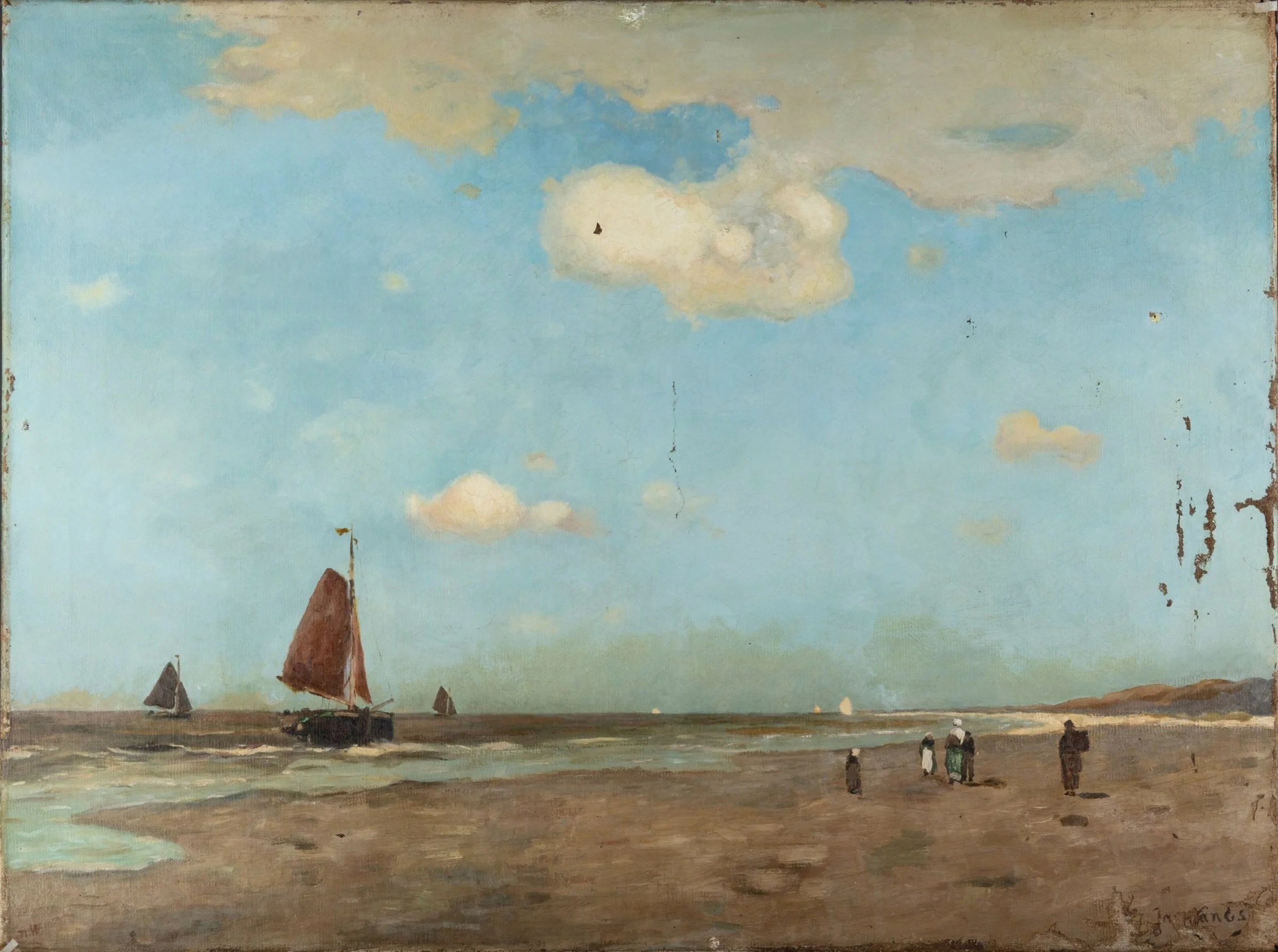
![after varnish removal]()
Na vernisafname
-
![presence overpaint]()
Mapping van de overschildering
-
![overpaint removal: first stage]()
Eerste fase verwijdering overschildering
Mechanisch verwijderd met een scalpel
-
![overpaint removal: second stage]()
Tweede fase verwijdering overschildering
-
![after overpaint removal]()
Na verwijdering overschildering
-
![detail of fils]()
Na vullen van lacunes
Met thermoplastische BEVA vullingen
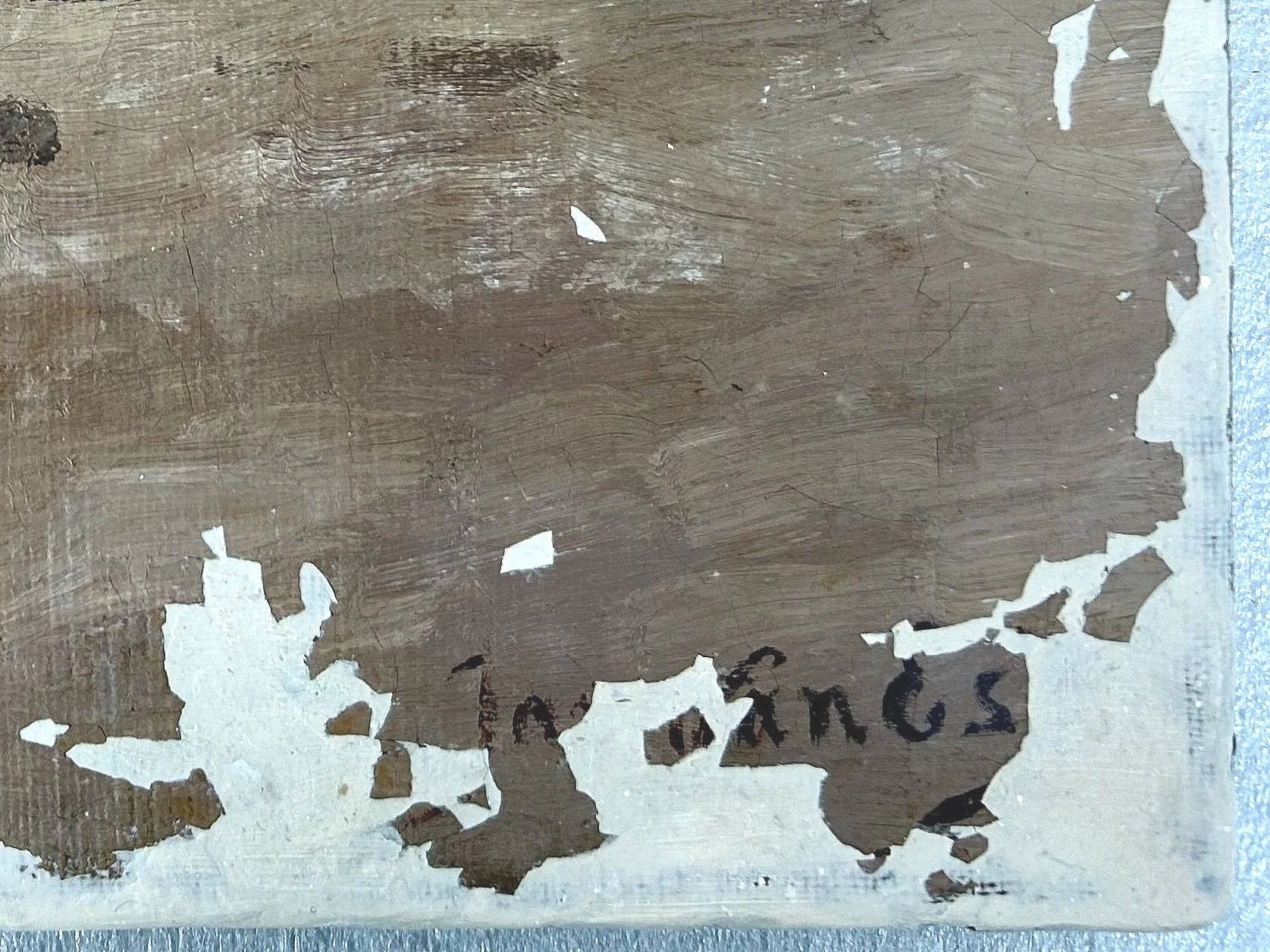
highlights
Het verwijderen van een vergeelde en verouderde vernislaag
Om de vernislaag veilig te verwijderen is gebruikgemaakt van een speciale gel. Deze gel ontstaat door de reactie tussen Carbopol en de polaire aminesurfactant Ethomeen C25. Het resultaat is een stabiele, goed controleerbare gel die polaire oplosmiddelen langzaam en gelijkmatig kan afgeven. Daardoor kon deze vernis gericht worden opgelost en verwijderd, zonder dat het oplosmiddel te snel inwerkte of uitvloeide.
De gel werd met een zachte kwast op het oppervlak aangebracht, waarbij de vormen van de compositie werden gevolgd. Vervolgens werd er een vel Melinexfolie overheen gelegd om verdamping van het oplosmiddel te beperken. Na drie minuten werd de gel verwijderd met een wattenstaafje. Resten van gel en opgeloste vernis zijn daarna weggehaald met oplosmiddel.
Consolidatie van kwetsbaar doek langs de omslagranden
Om loshangende stukjes doek en kwetsbare zones langs de omslagranden te verstevigen, zijn kleine verstevigingspatches aangebracht tussen het spieraam en het doek. Deze patches bestonden uit niet‑geweven polyester dat vooraf was ingestreken met Plextol B500. Nadat de patches op maat waren gesneden voor de betreffende plekken, werd ethylacetaat op de lijmlaag aangebracht om deze te activeren. Vervolgens zijn de patches zorgvuldig op hun plaats gebracht en is lichte druk toegepast om een goede hechting tussen doek en spieraam te verzekeren.
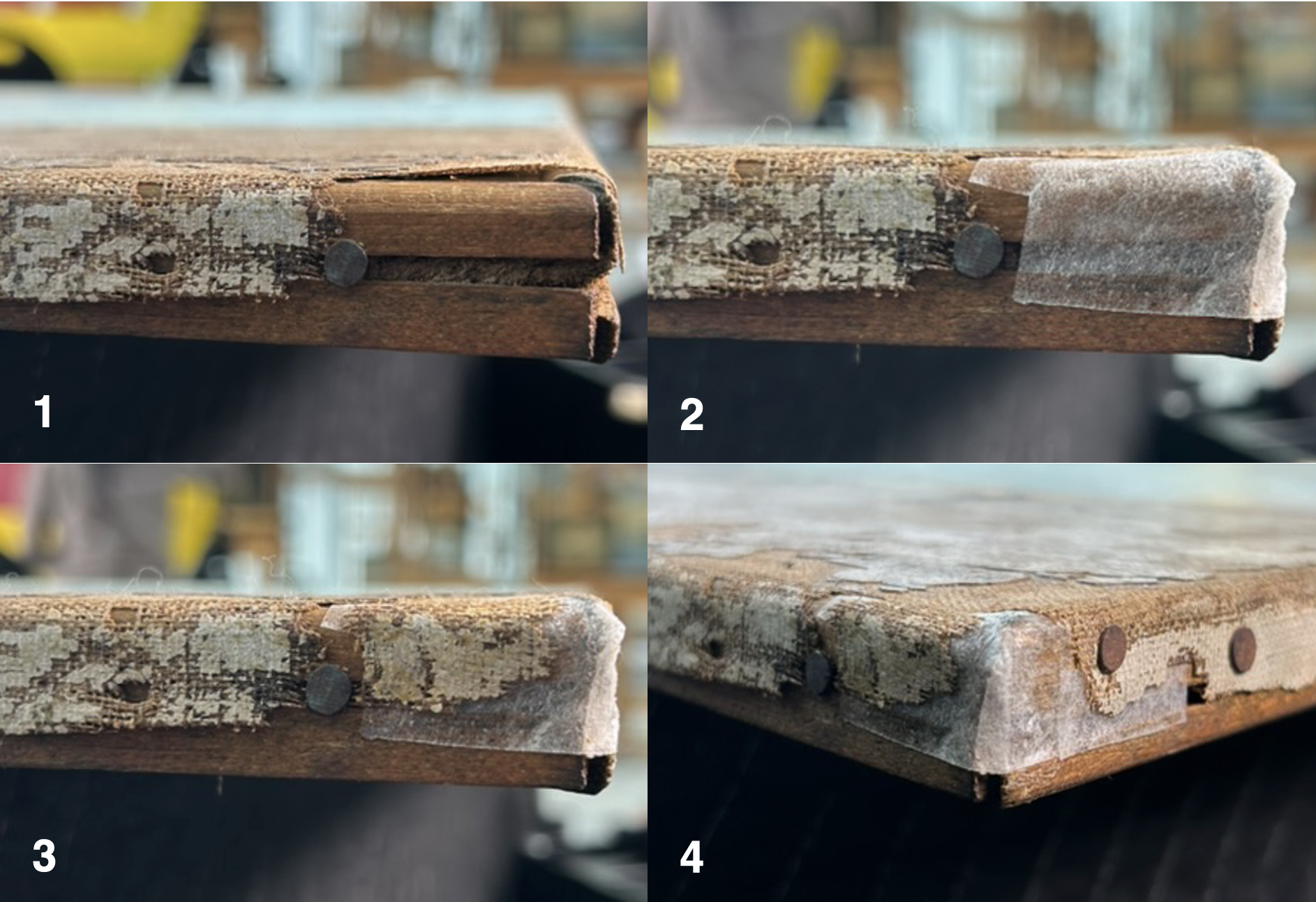
1: rechterbenedenhoek vóór het aanbrengen van de patch 2: eerste fase van het aanbrengen van de patch 3: loshangend stukje doek teruggehecht op de patch 4: resultaat van de consolidatie in de rechterbenedenhoek