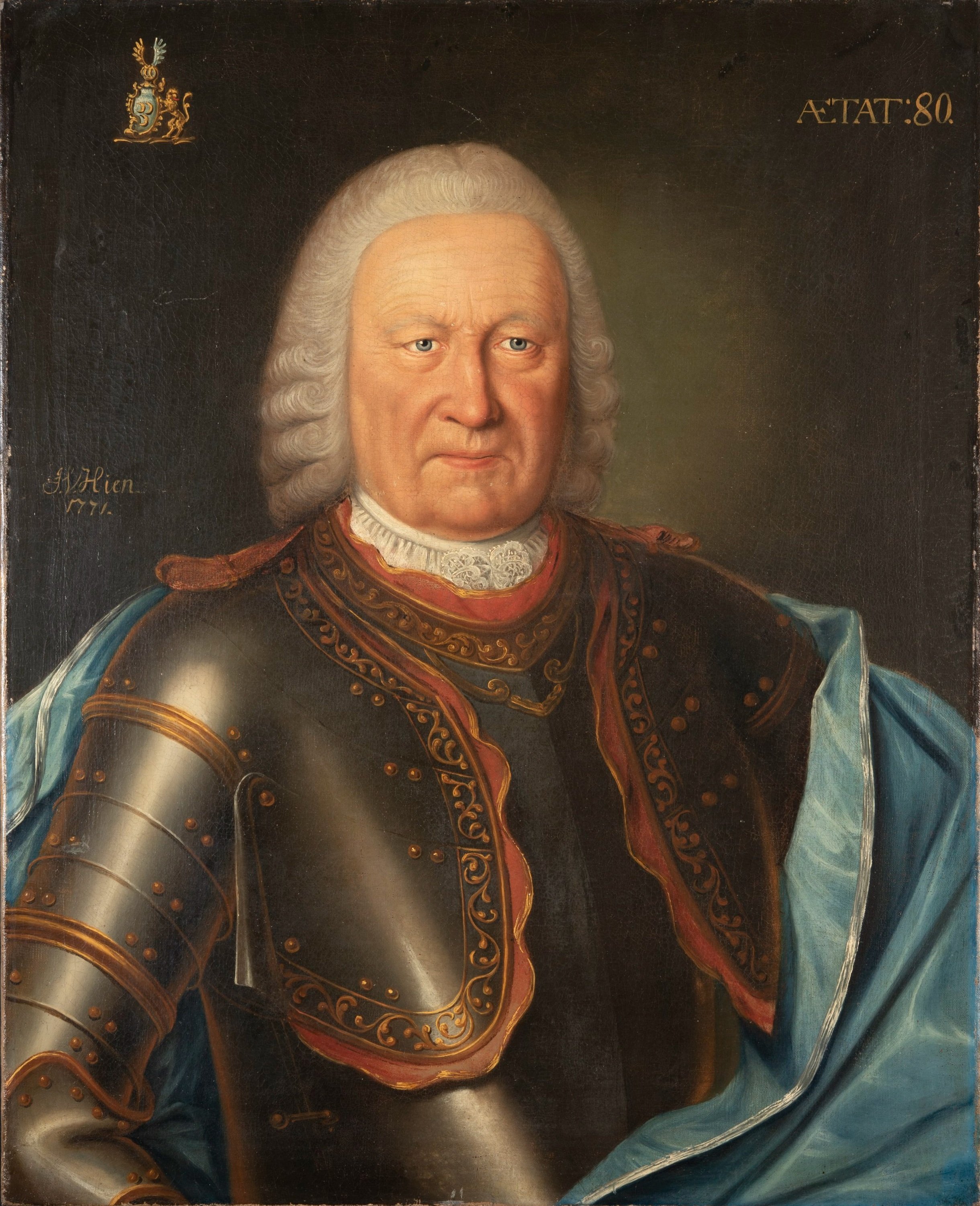
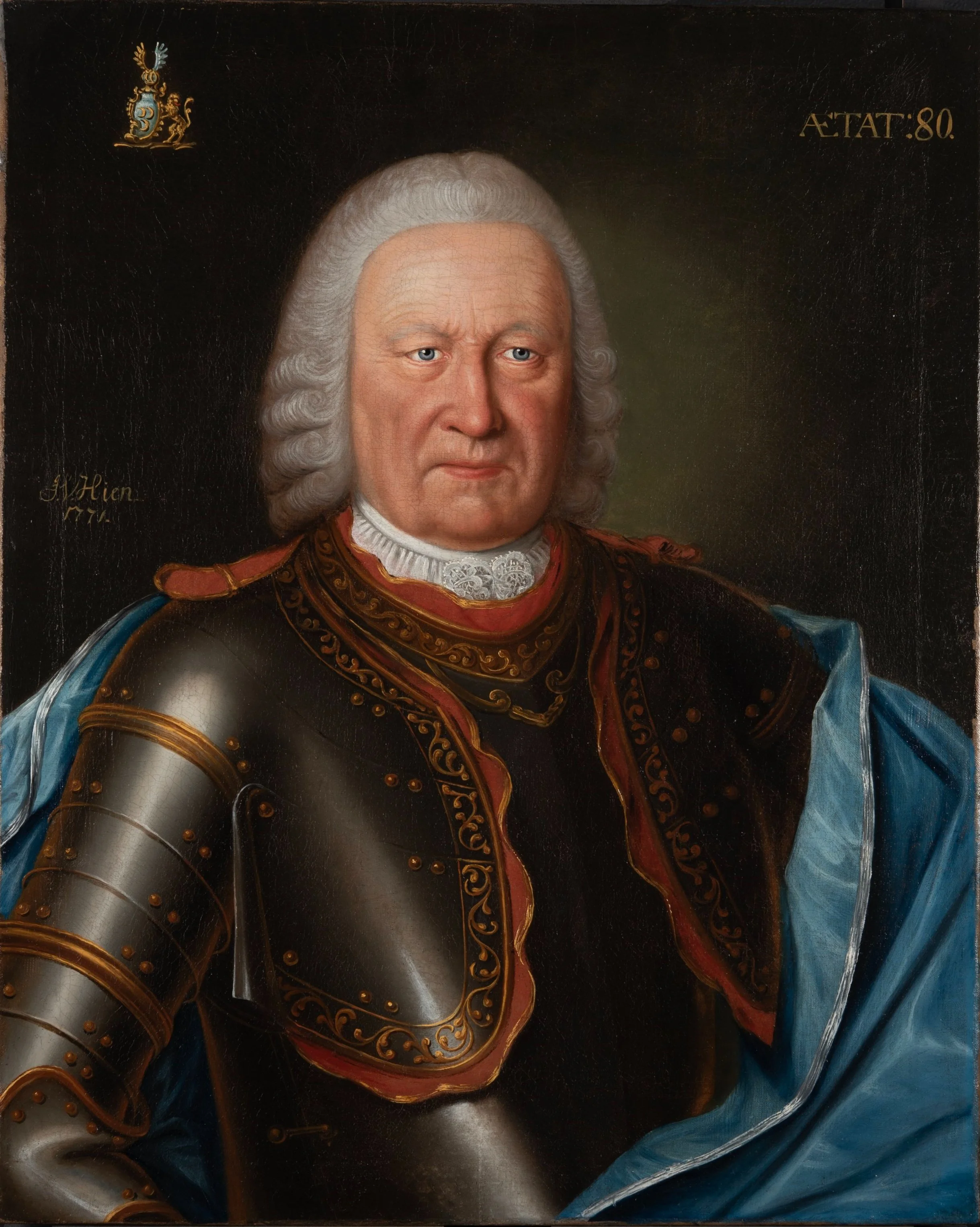
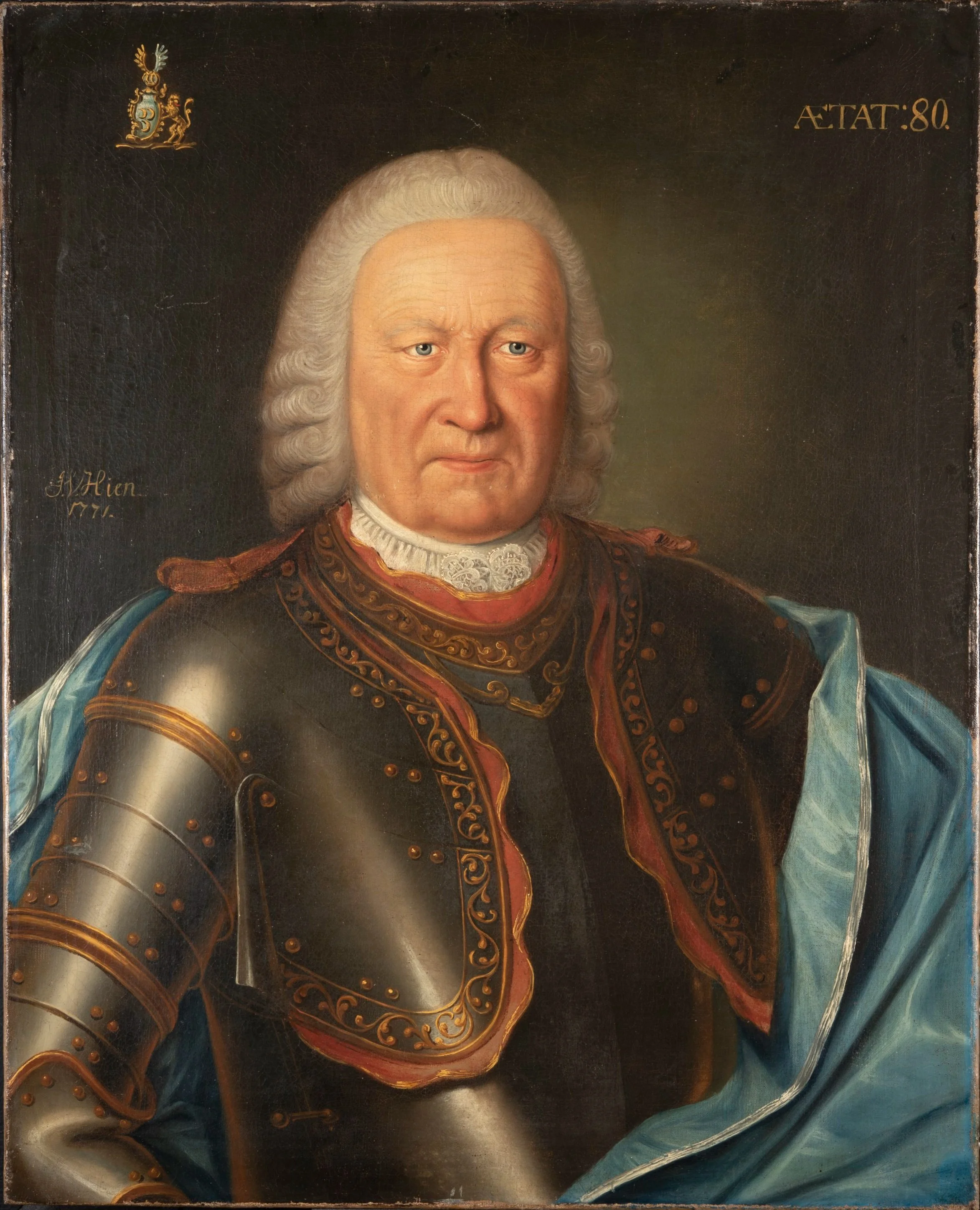
Voor
Na
-
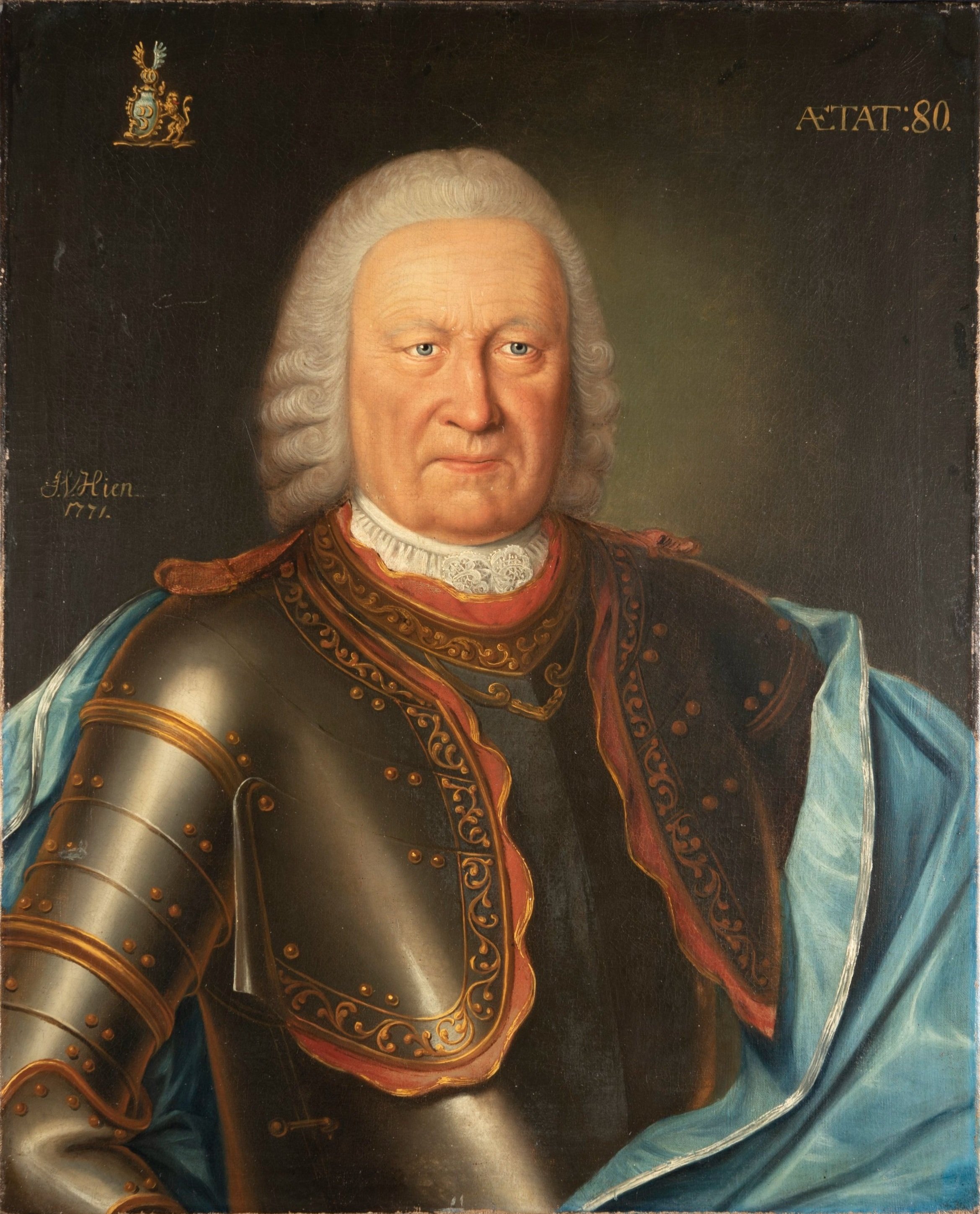
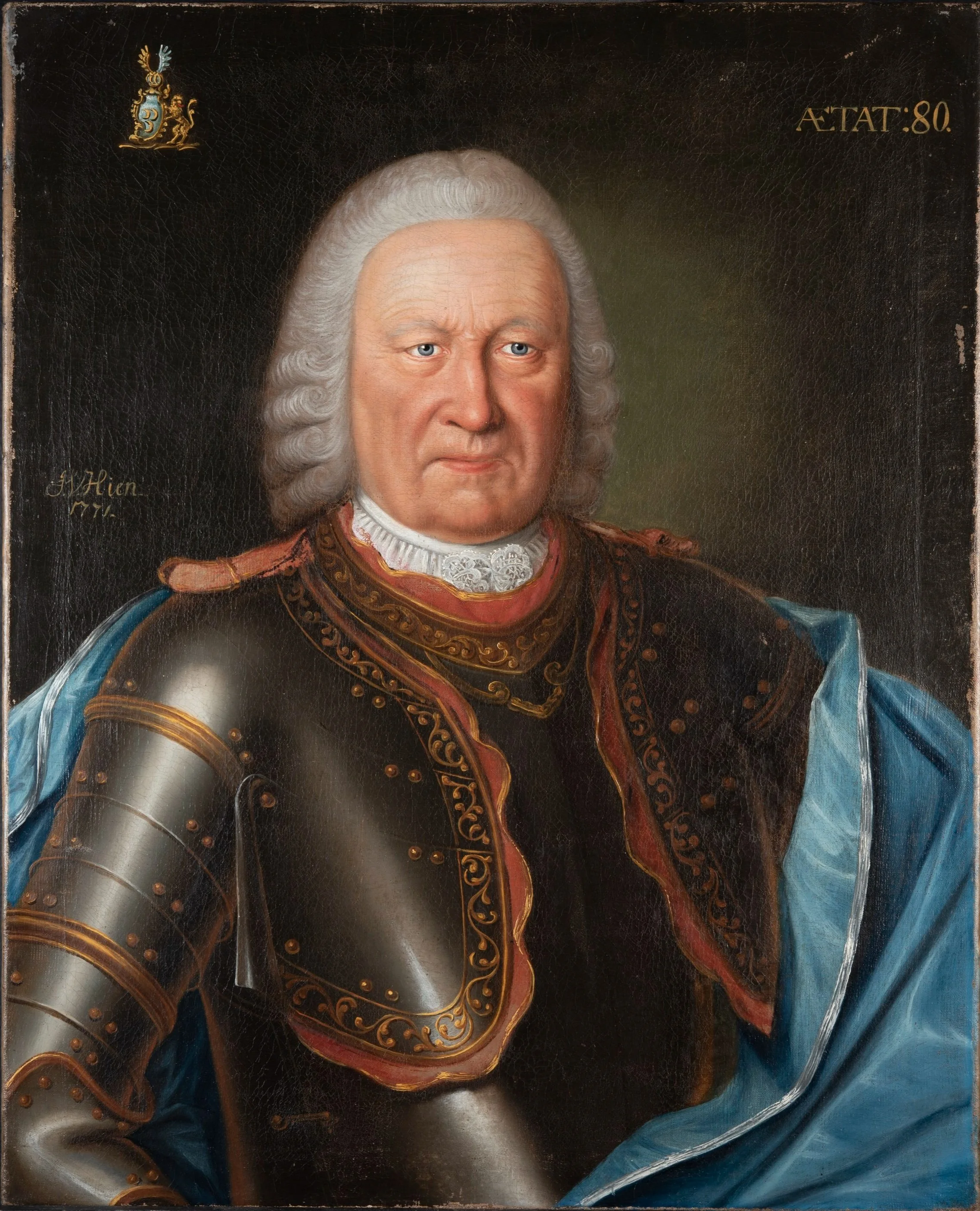
Portret van Allard Johan Gansneb genaamd Tengnagel
J. van Hien
1771
olie op doek, bedoekt
76 x 62 x 3 cm
P.O.M.00690
Collectie Overijssel
-
Was-hars bedoeking
Oppervlaktevuil
Vergeeld en gecraqueleerd vernis
Verkleurde retouches
Kleine overschilderingen
-
Doel de esthetische kwaliteit en de fysieke conditie van het schilderij verbeteren, zodat het zijn historische en herdenkingsfunctie kan blijven vervullen
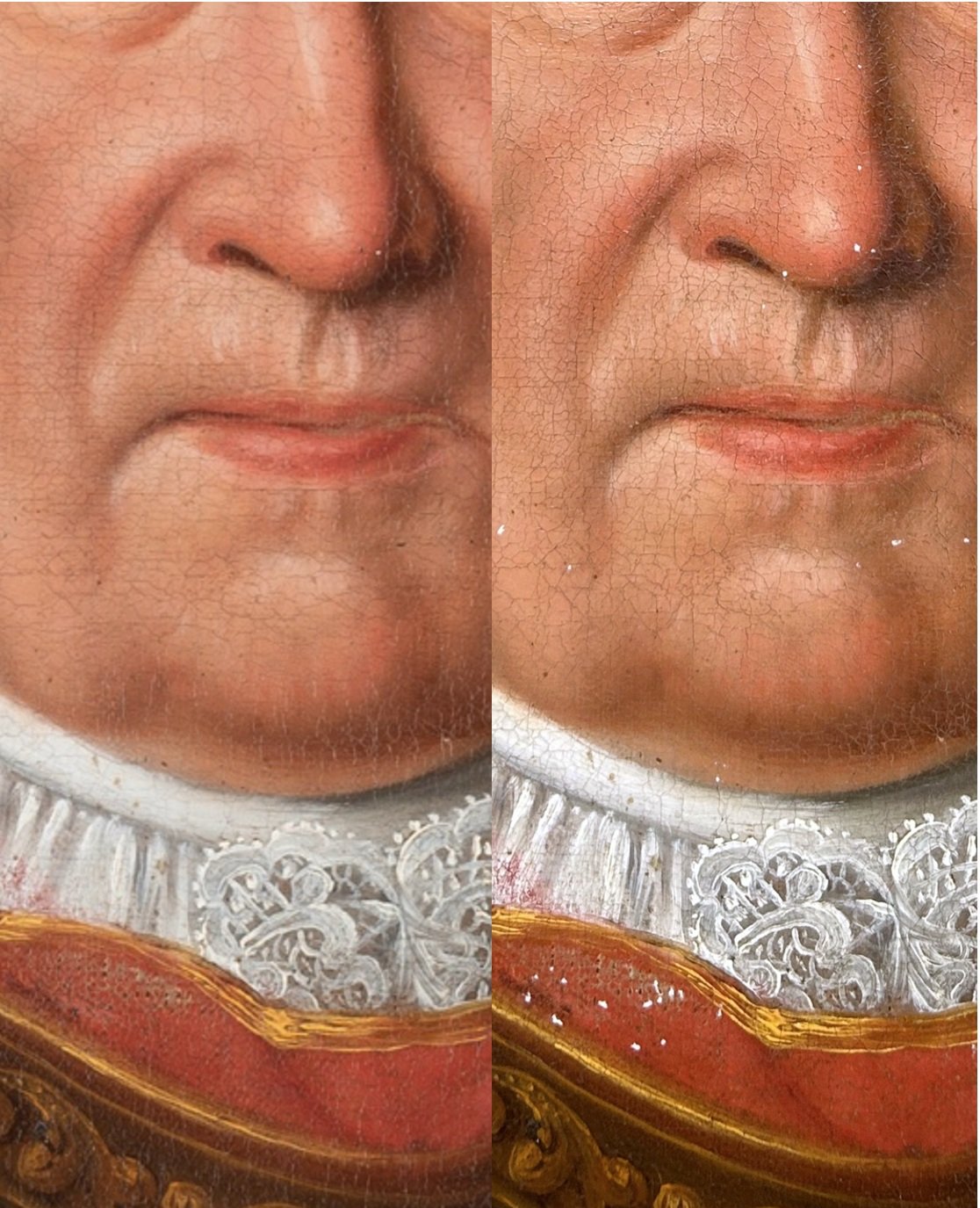
Verwijderen van oppervlaktevuil
Door het schilderij te reinigen met droge en natte methoden wordt het beschermd tegen mogelijke degradatie die ontstaat door opgehoopt vuil. De reiniging geeft bovendien een beter zicht op de staat van de onderliggende lagen en maakt het verwijderen van de vernislaag eenvoudiger.
Verwijderen van de vernislaag
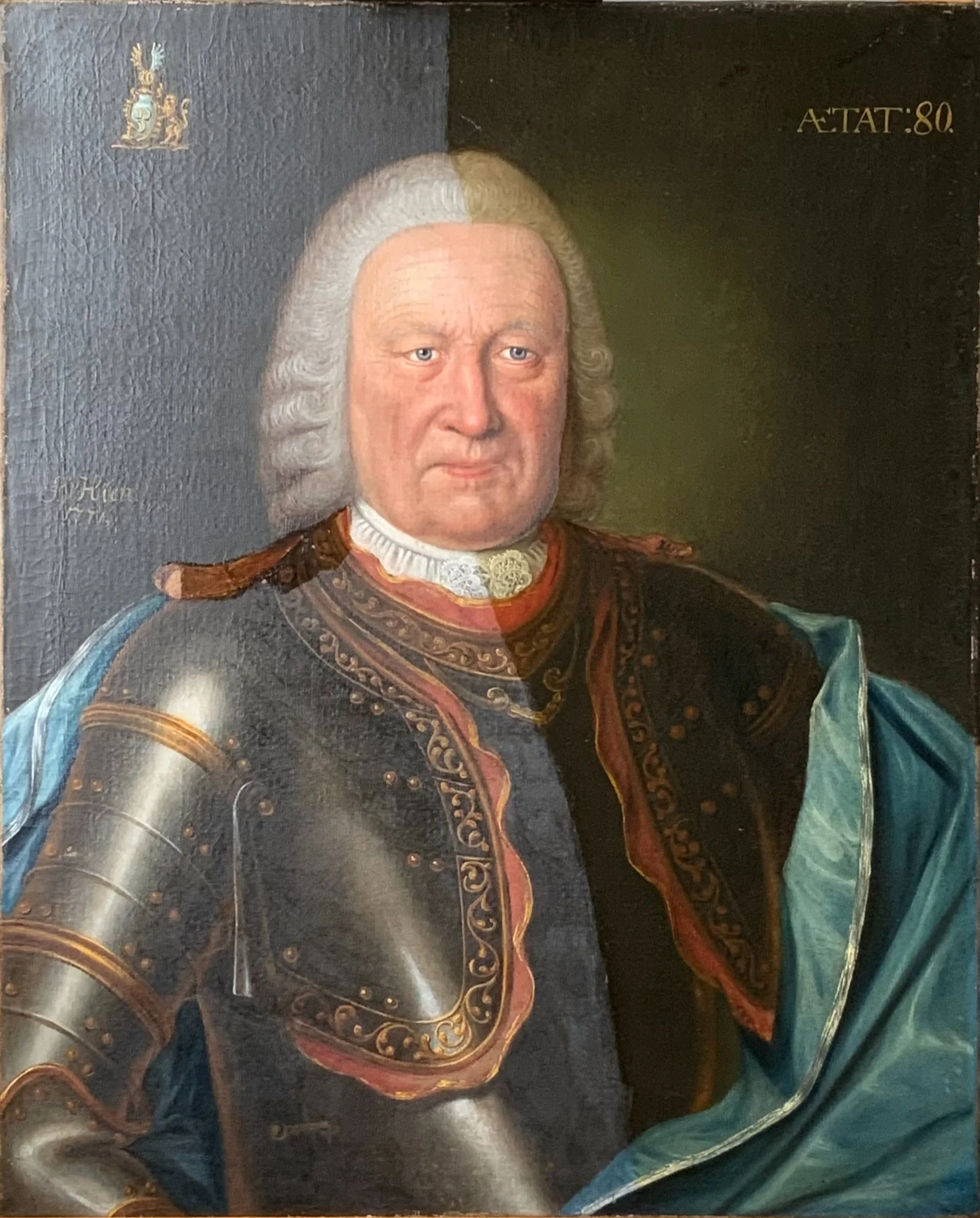
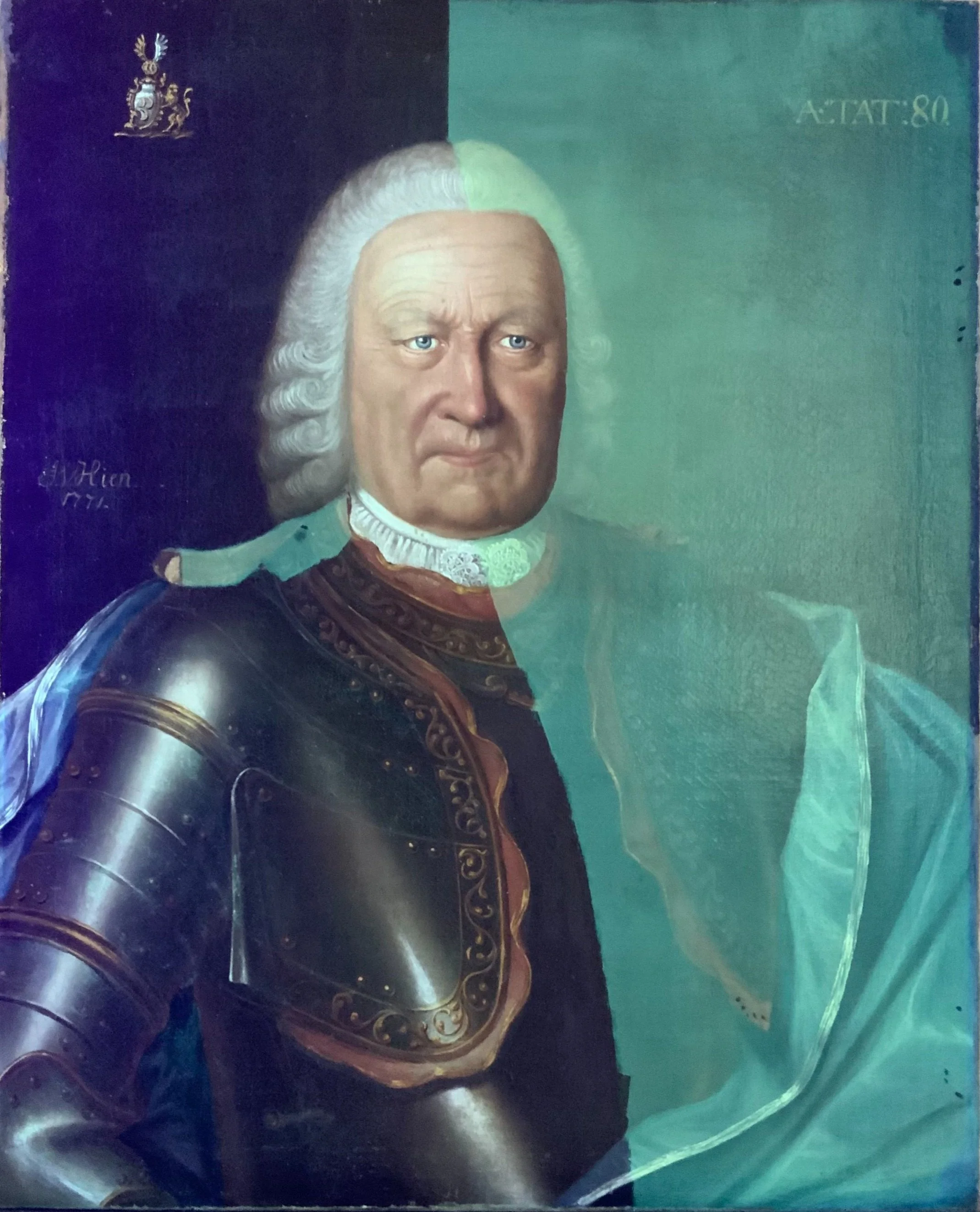
De gedegradeerde, niet‑originele vernislaag, aangetast door fijne craquelé, blancheren, en vergeling, wordt verwijderd. De toenemende ouderdom van de vernis maakt toekomstige verwijdering steeds lastiger. Om de originele verflaag zo goed mogelijk te beschermen, wordt gewerkt met een laag‑polair oplosmiddelgel in combinatie met Evolon®‑tissues.
Verwijderen van retouches en overschilderingen
De retouches en de kleine zone overschildering in de rechter schouderdecoratie, aangebracht tijdens een eerdere behandeling, zijn verkleurd en bedekken de originele verf. Het verwijderen ervan verbetert zowel de esthetiek als de materiële integriteit van het schilderij.
Tussenvernis
Een tussenvernis met Paraloid B72 wordt aangebracht om de originele verflaag te isoleren van de retouches. Deze laag verdiept tevens de kleurverzadiging, wat essentieel is om een goede kleuraansluiting tussen retouches en origineel te bereiken.
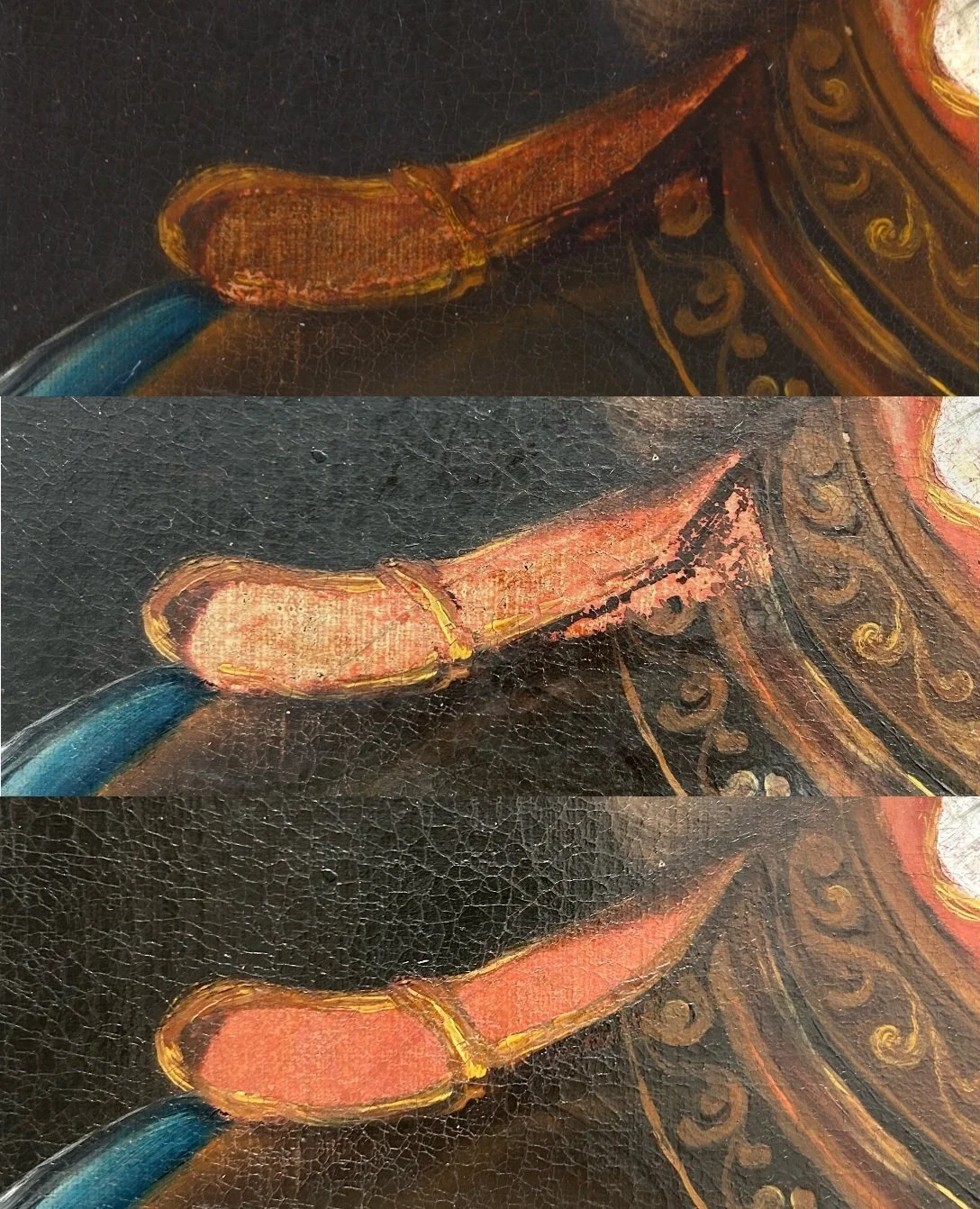
Vullen en retoucheren
Kleine lacunes worden gevuld om een egaal oppervlak te creëren voor de retouches. De vullingen worden vervolgens geretoucheerd om de eenheid in kleur en compositie te herstellen.
Slotvernis
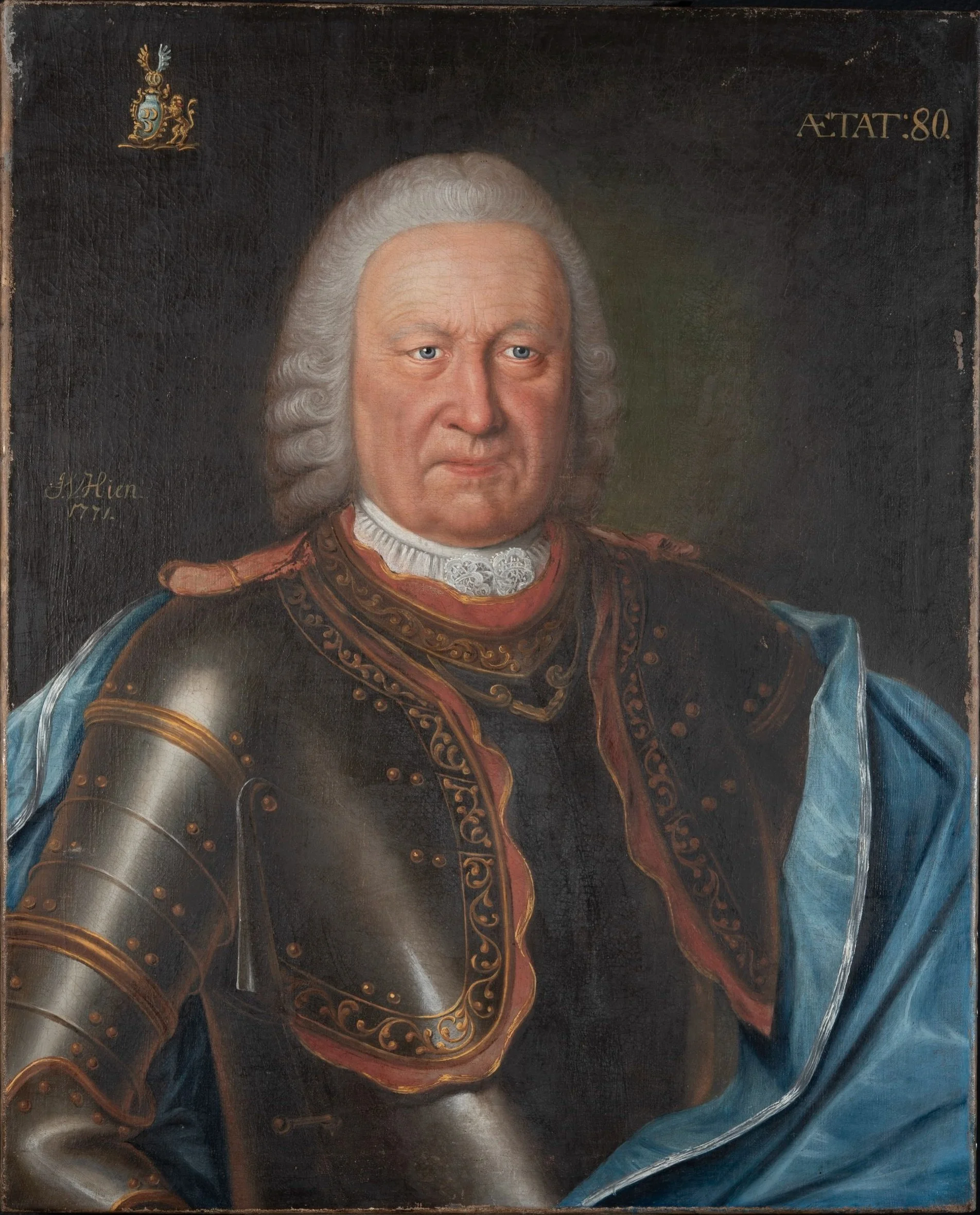
Een slotvernis met Regalrez 1094 beschermt de verflaag tegen UV‑licht en schommelingen in relatieve luchtvochtigheid. Daarnaast versterkt deze laag de kleurverzadiging en zorgt hij voor een gelijkmatig glansniveau.
Achterkant bescherming
Om het doek te beschermen tegen fysieke schade, vuil en vocht wordt een achterplaat aangebracht aan de keerzijde van het schilderij.
Alle bevindingen van het technische onderzoek en de resultaten van de behandeling worden zorgvuldig en volledig gedocumenteerd.
-
![initial condition]()
Voor behandeling
-
![After surface dirt removal]()
Na verwijderen oppervlaktevuil
-
![During varnish removal]()
Tijdens de vernisafname
-
![During varnish removal UV]()
Tijdens de vernisafname
(ultraviolet licht)
-
![After varnish removal]()
Na vernisafname
-
![Intermediate varnish layer]()
Na aanbrengen tussentijdse vernis
-
![before and after filling]()
Voor en na aanbrengen vullingen
-
![after retouching]()
↑ voor, tijdens ↓ na retoucheren
-
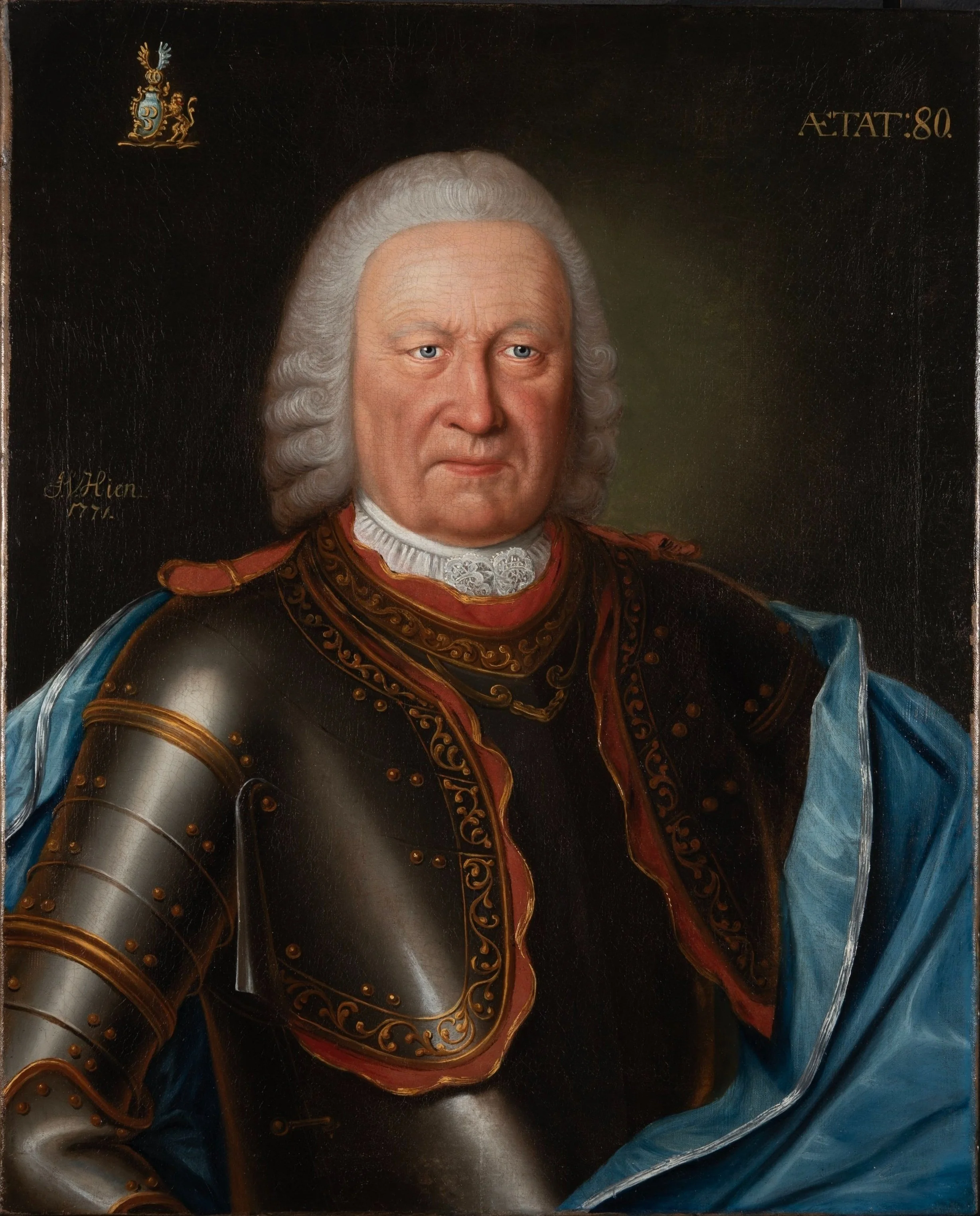
![final result]()
Na behandeling
highlights
Deze dwarsdoorsnede is genomen om een gedetailleerd beeld te krijgen van de opbouw en samenstelling van de verflagen. Zo’n analyse biedt waardevolle inzichten in de gebruikte materialen, de volgorde waarin de lagen zijn aangebracht en eventuele latere ingrepen of restauraties.
Onder de microscoop wordt zichtbaar hoe het schilderij is opgebouwd, wat helpt bij het begrijpen van de techniek van de kunstenaar, het maken van weloverwogen restauratiekeuzes en het herkennen van verouderings- en degradatieprocessen.
Laagopbouw van de dwarsdoorsnede:
beige grondlaag
verkleurde rode lake‑verflaag
rode overschildering
goudbruine overschildering
vernislaag
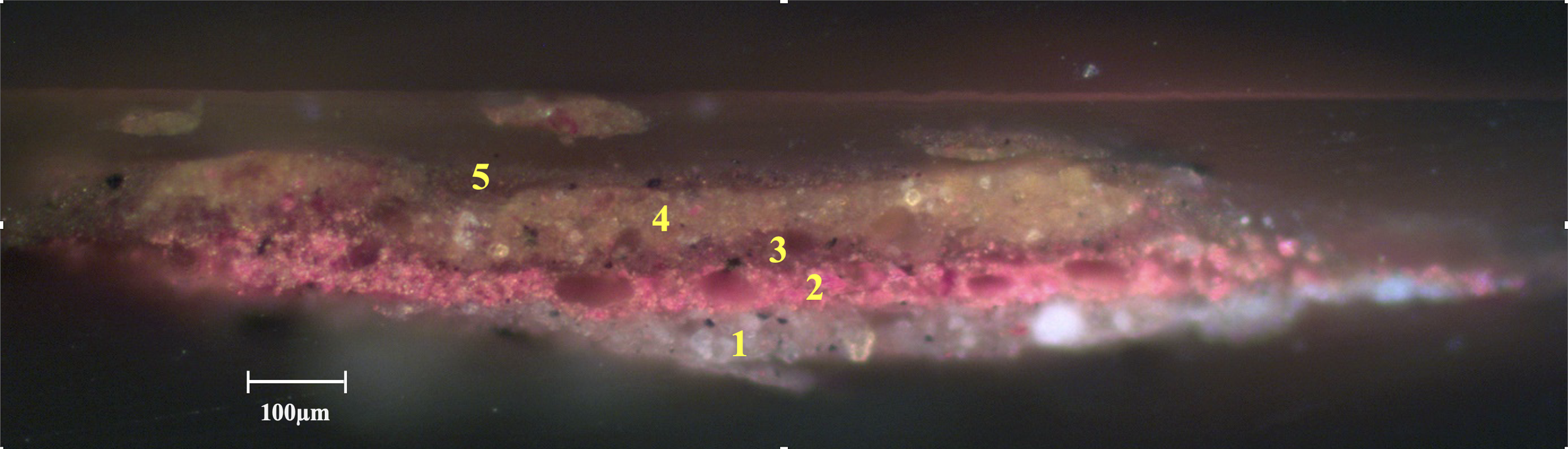
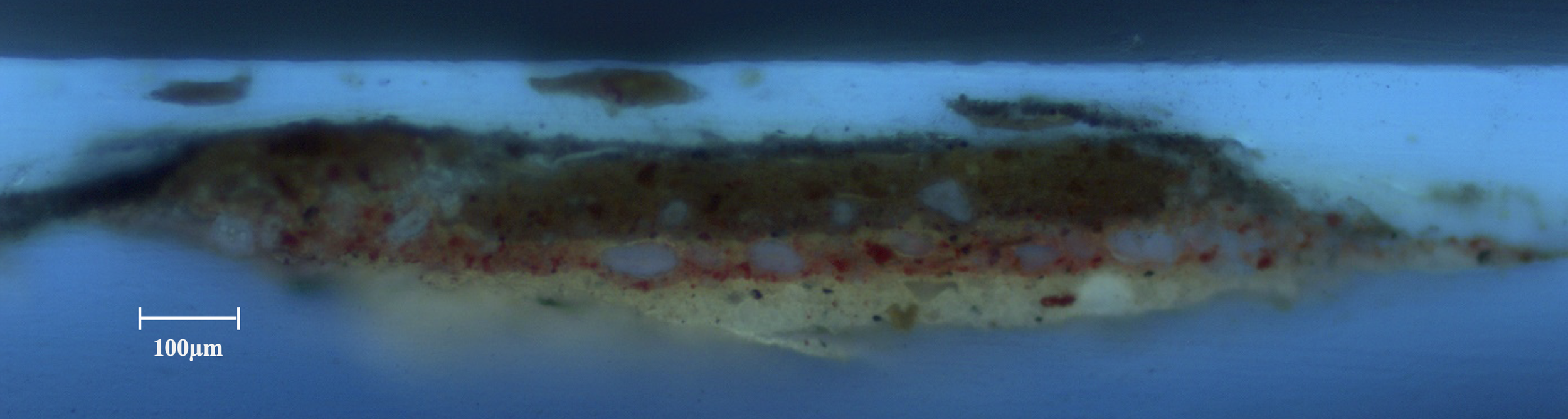
microscopische afbeeldingen ↑ zichtbaar licht, dark field, vergroting van 500x ↓ ultraviolet licht
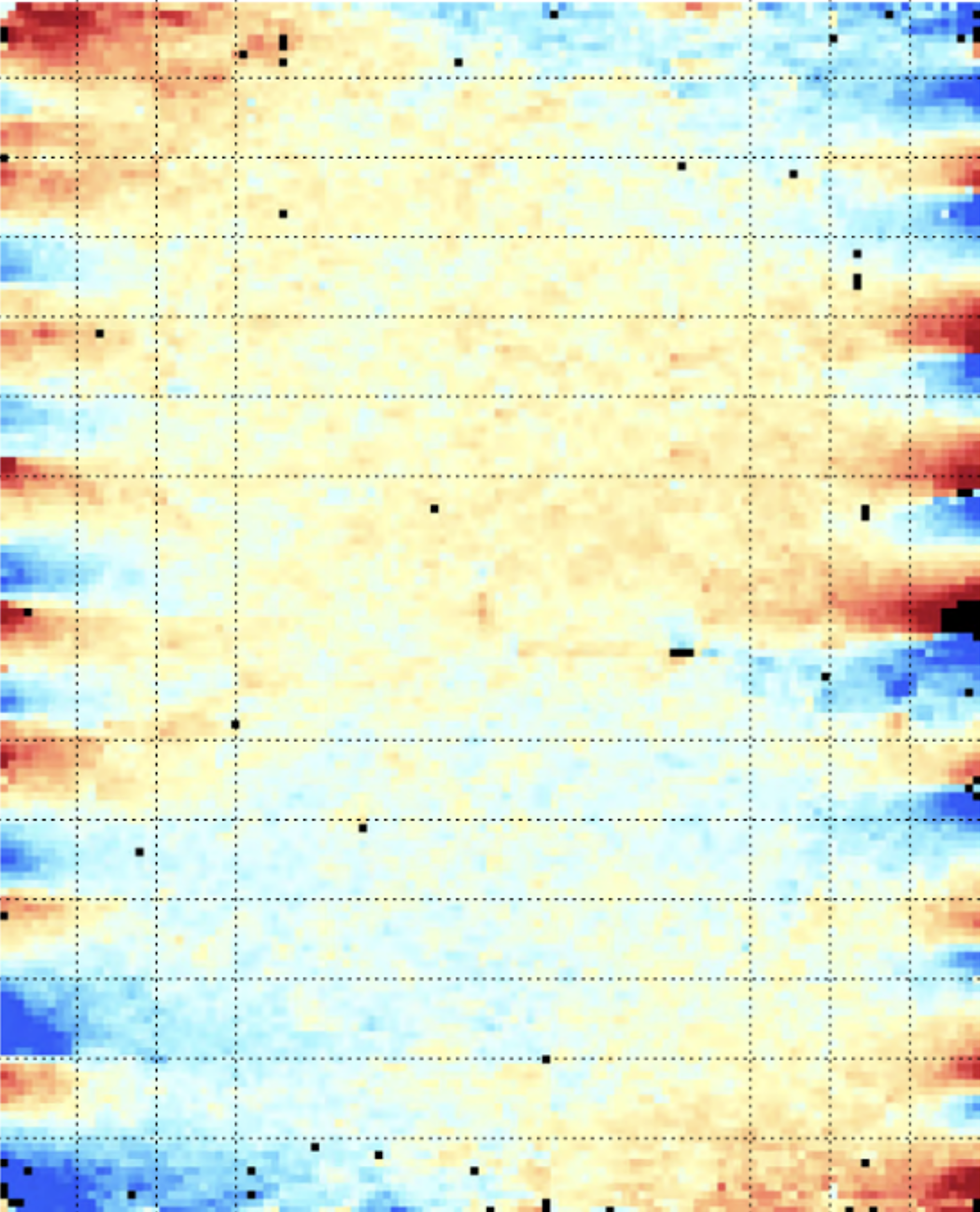
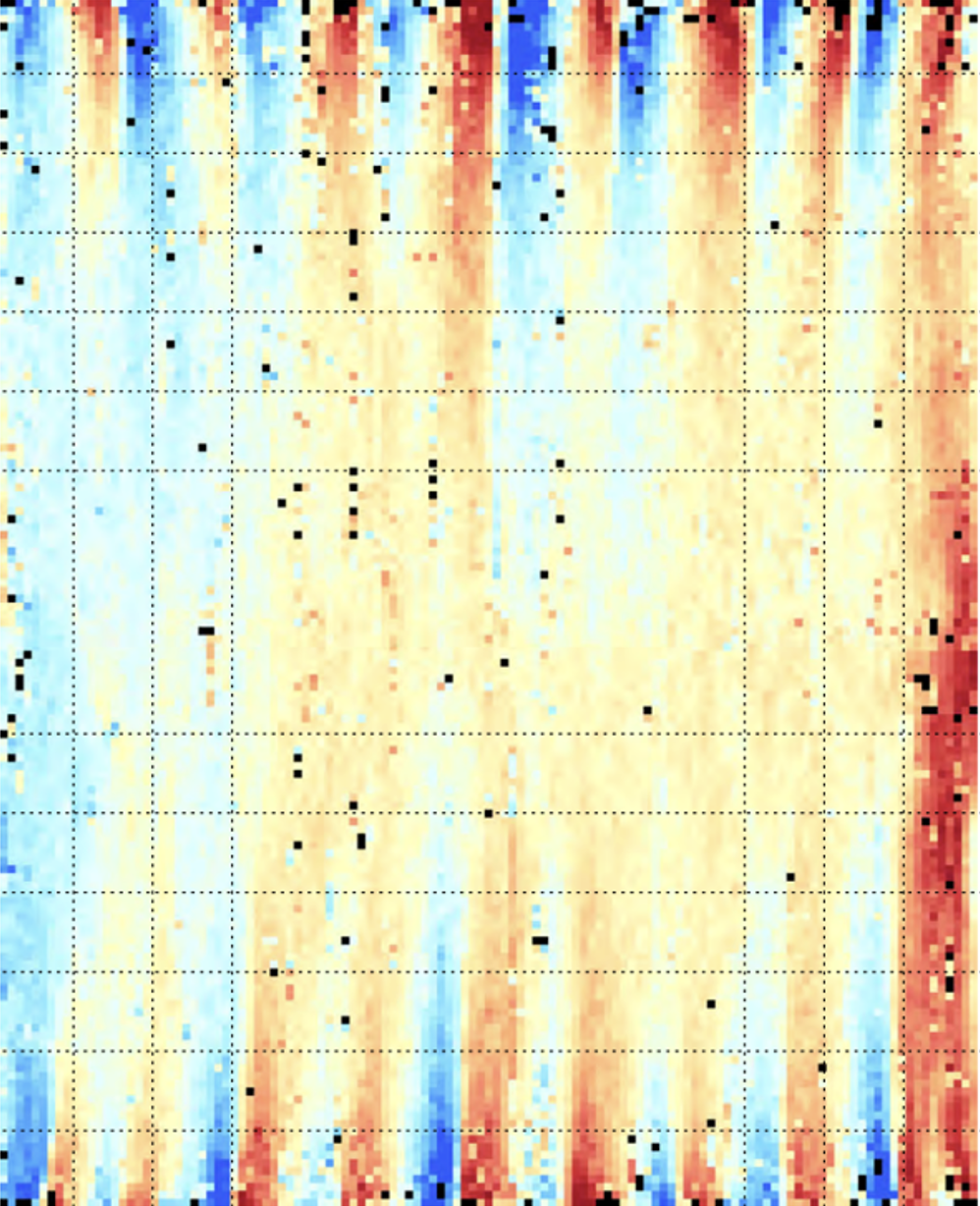
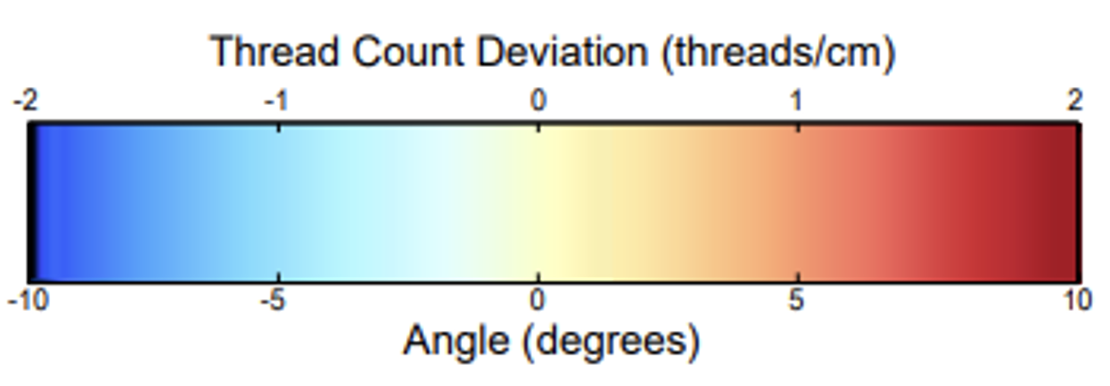
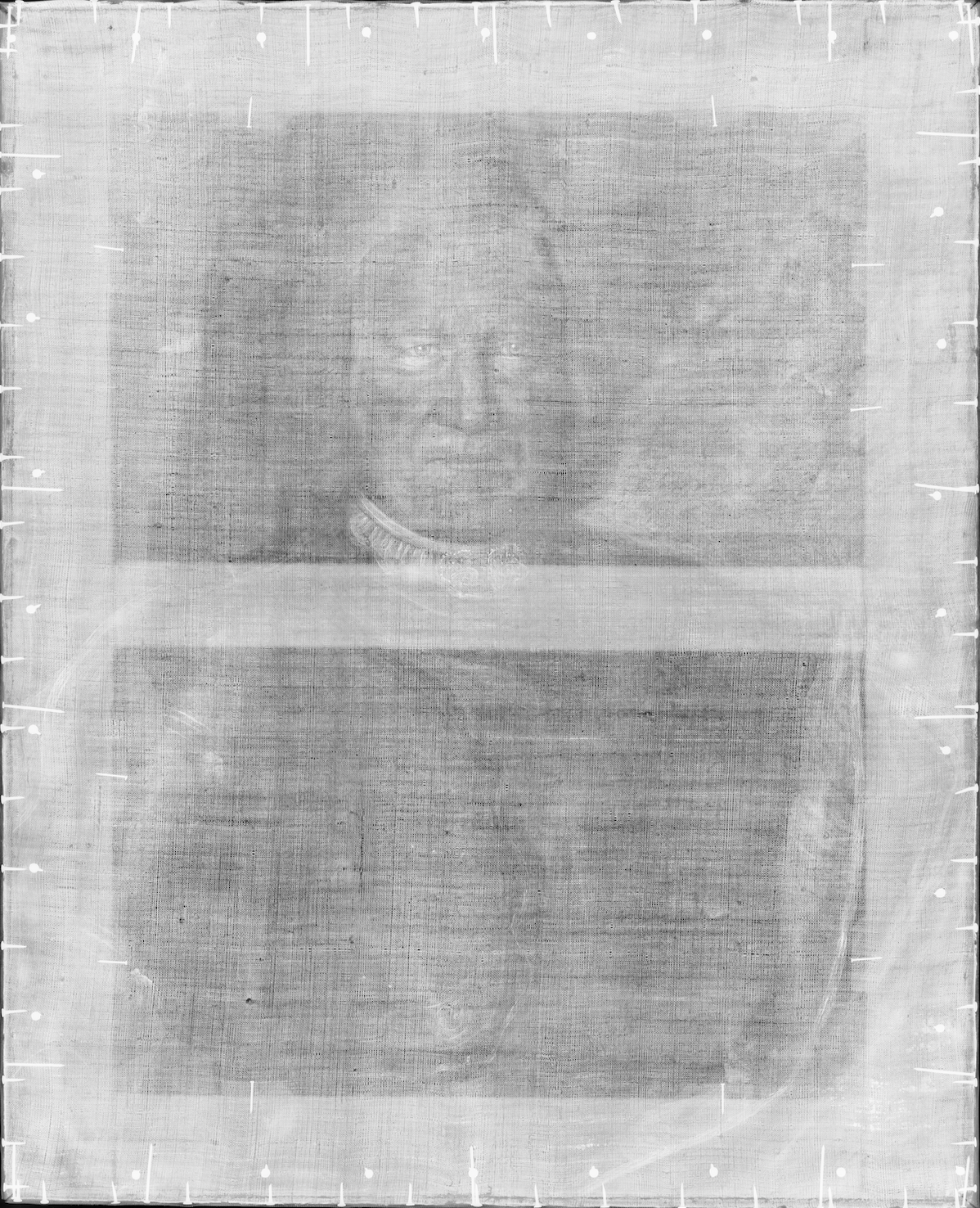
Bij een automatische draadtelling worden geavanceerde beeldverwerkingstechnieken gebruikt om de draden in het doek te herkennen en te tellen op basis van röntgenopnamen. De analyse is uitgevoerd door D.H. Johnson (Rice University).
Deze methode maakt het mogelijk om snel en nauwkeurig de dichtheid van het weefsel te bepalen. Inzicht in de draadtelling kan waardevolle informatie opleveren over de datering van het doek en over de werkwijze van de kunstenaar.
De horizontale en verticale draadrichtingskaarten rechts laten zien waar de spijkers het doek oorspronkelijk aan de spieraam hebben bevestigd. Het karakteristieke golvende patroon, ook wel primaire “cusping” genoemd, ontstaat wanneer het doek tijdens het opspannen in pieken wordt getrokken. Omdat dit patroon overal gelijkmatig aanwezig is, wijst dit erop dat het doek sinds de eerste opspanning niet noemenswaardig is verkleind.
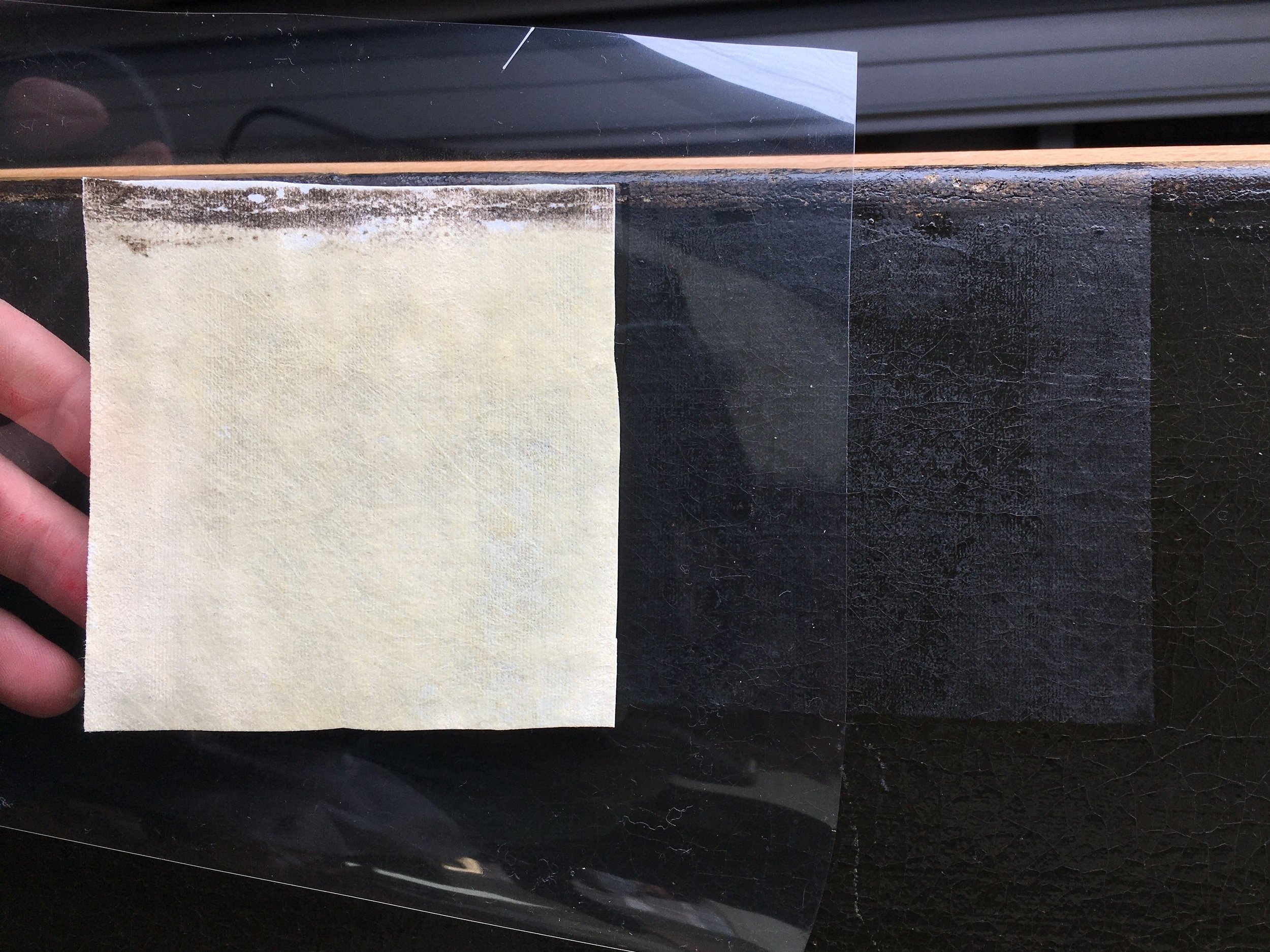
Voor het verwijderen van de vernislaag zijn Evolon®‑tissues en een gel met een minimale polariteit gebruikt. Deze combinatie beperkt de blootstelling aan oplosmiddelen, voorkomt diepe indringing in de verflaag, vermindert mechanische frictie en geeft veel controle over het reinigingsproces.
De gel werd op het tissue aangebracht dat op maat gesneden was volgens de vormen in de compositie, zodat er geen randen of tidelines konden ontstaan. Daarna werd het tissue tussen Melinex®‑folies geperst om de gel gelijkmatig te verdelen. Met de gelzijde op het schilderij geplaatst, verwijderde het tissue binnen dertig seconden het grootste deel van de vernis. De resterende vernislaag werd vervolgens met een wattenstaafje en een minder polair oplosmiddel weggehaald.
Op deze afbeelding is het gebruikte tissue te zien dat de vergeelde vernis heeft opgenomen en daarbij ook enkele retouches heeft verwijderd.