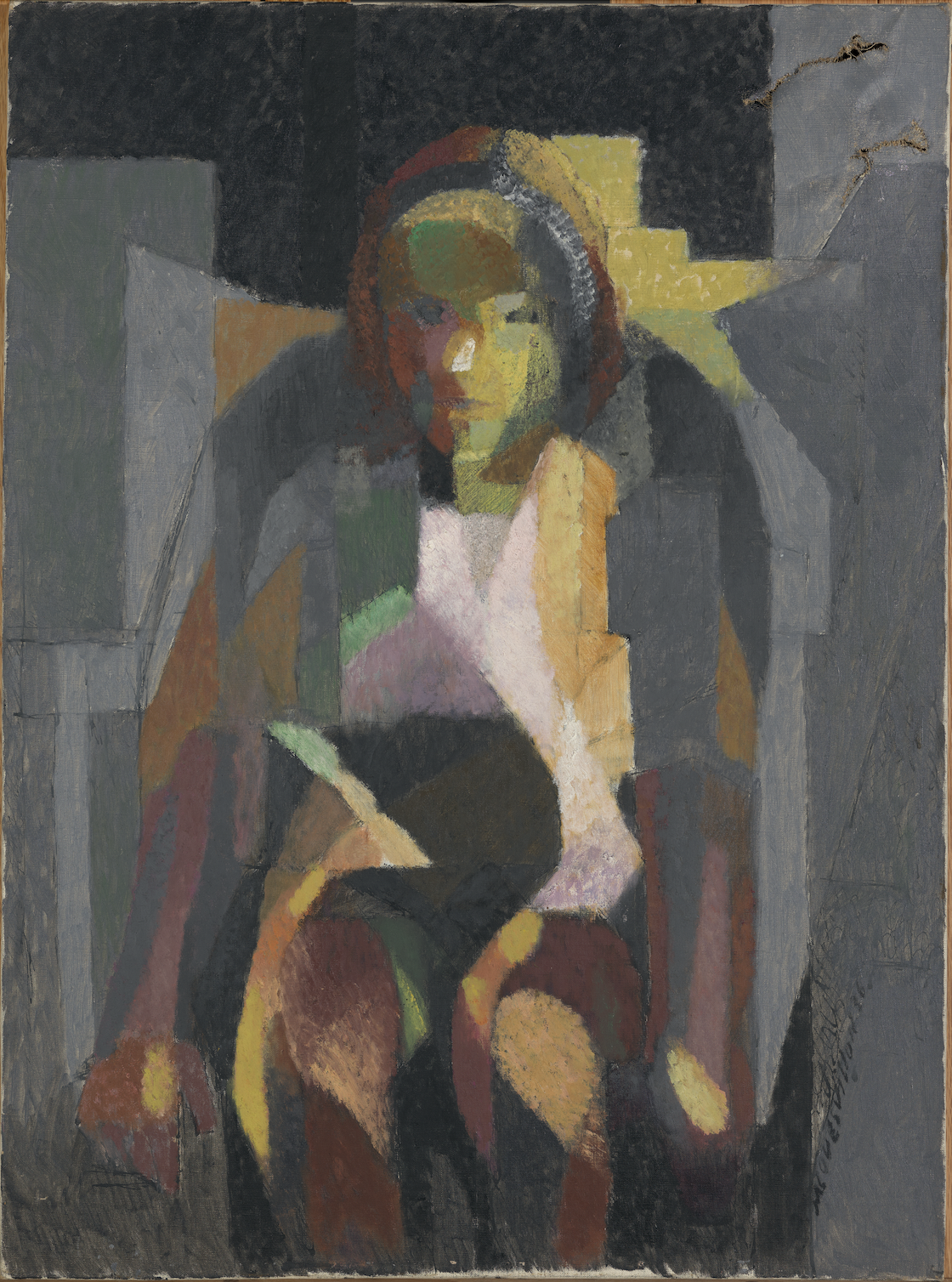
Voor behandeling
-
Seated Girl
Jacques Villon
1936
olieverf op linnen
80.77 × 59.69 cm
Yale University Art Gallery
-
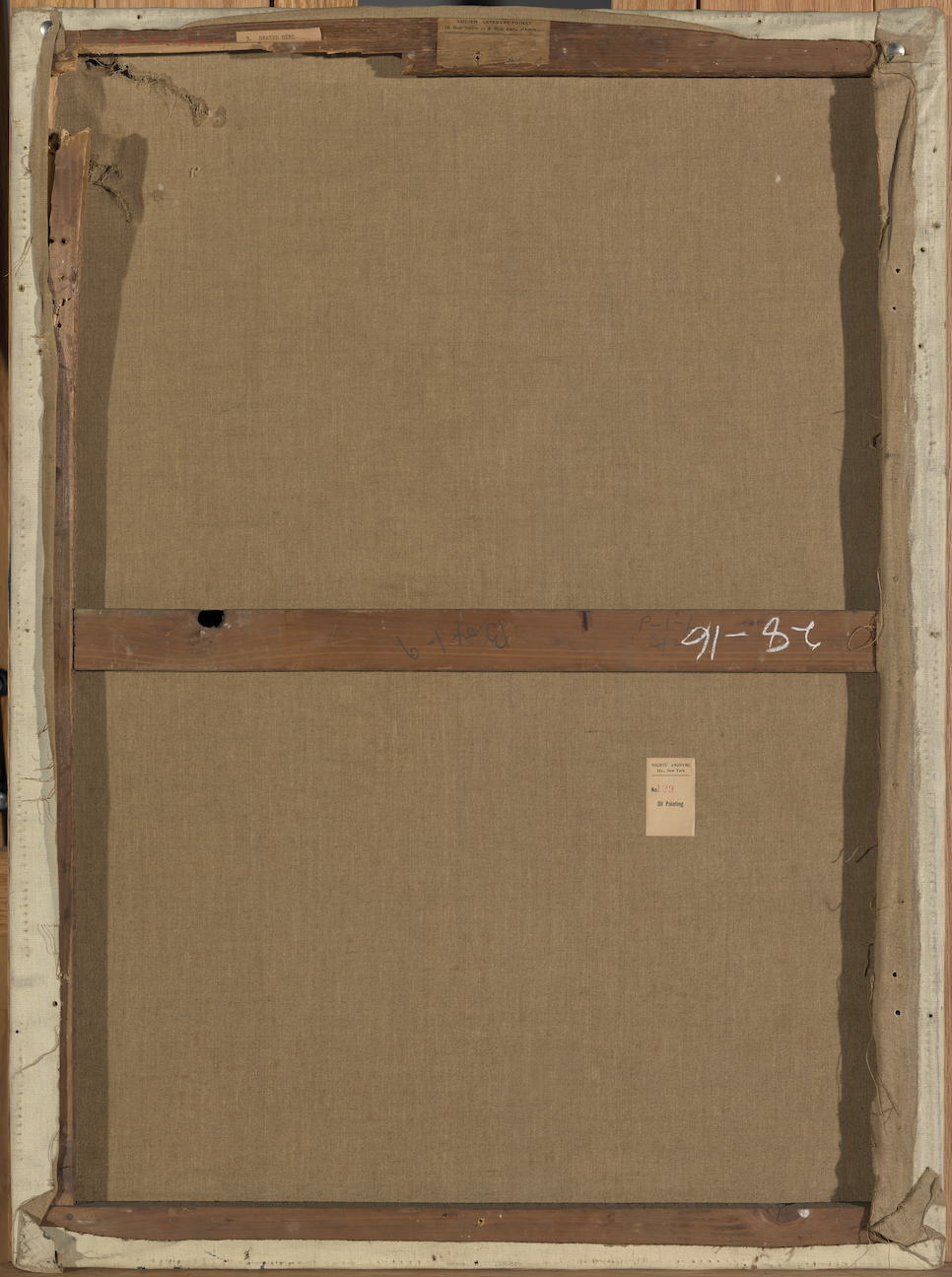
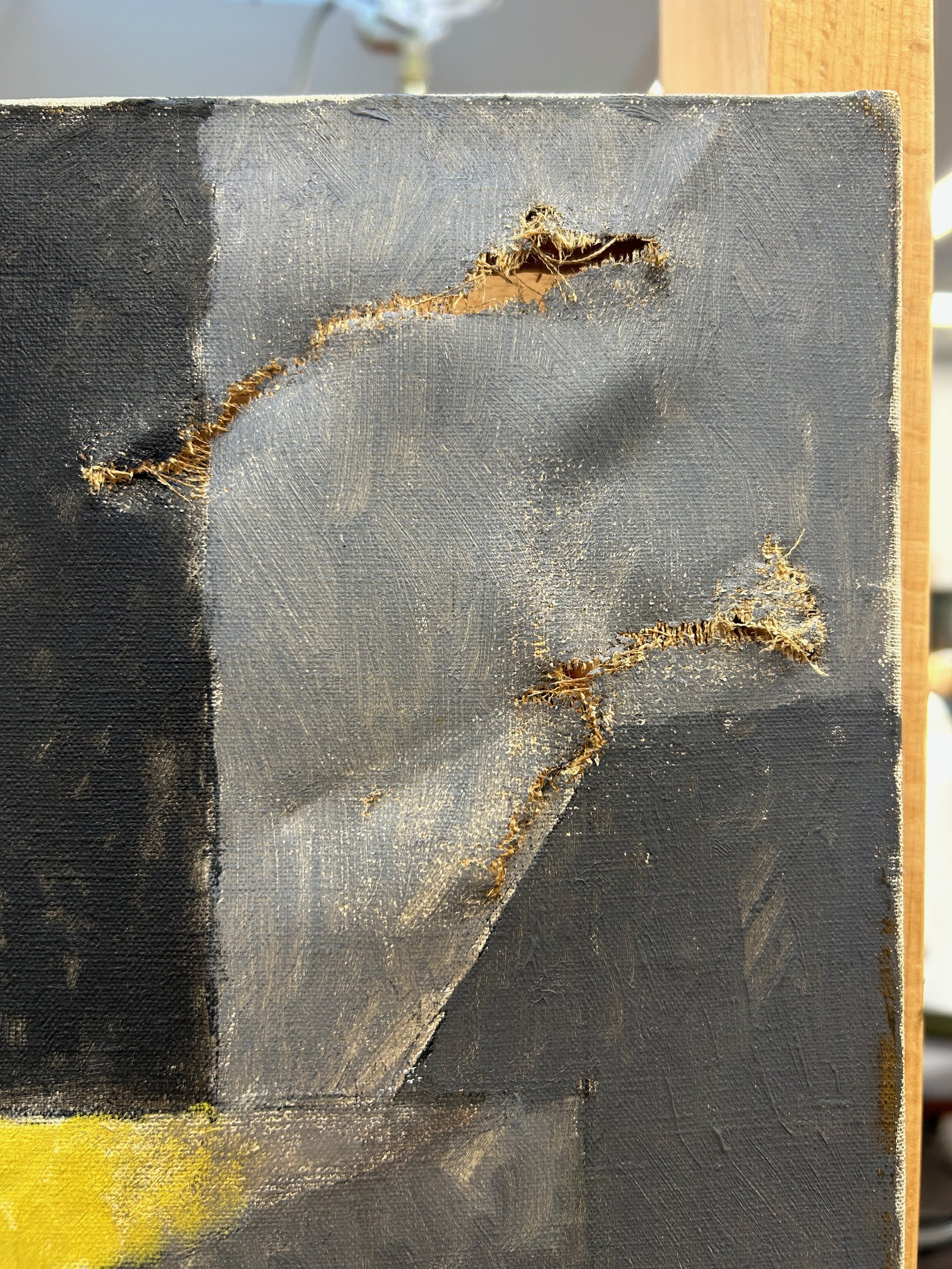
Twee scheuren in het doek
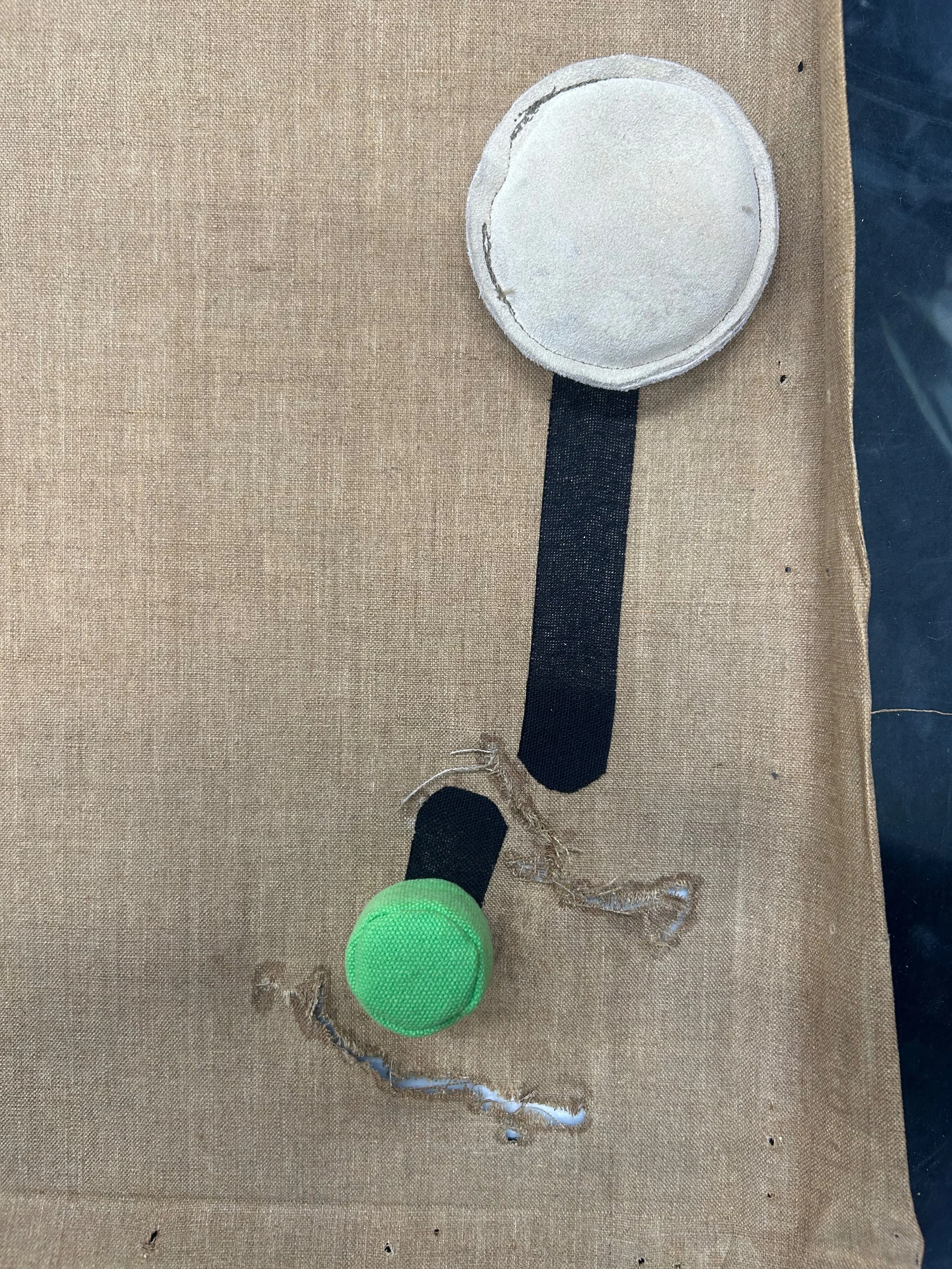
Spieraam met ontbrekende en gebroken delen
Verfverlies langs de scheuren
Lichte vervormingen van het doek
Oppervlaktevuil
-
Doel het herstellen van de esthetische integriteit van de compositie en de mechanische eigenschappen van het doek.
Consolidatie van losse verfbladdertjes
Verwijderen van het doek van het spieraam
Reiniging van het spieraam
Reiniging van het doek
Vezelanalyse
Herstel van de scheuren
Behandeling van vervormingen
Opspannen van het doek op een nieuw spieraam
Vullen
Retoucheren
Aanbrengen van achterkant bescherming
Een grondige documentatie van zowel de bevindingen van het technische onderzoek als de resultaten van de behandeling zal gedetailleerd worden uitgevoerd.
-
![Voor behandeling]()
Voor behandeling
-
![Achterzijde voor behandeling]()
Achterzijde voor behandeling
-
![Close-up van de scheuren]()
Close-up van de scheuren
-
![Kinesiologie tape gebruikt tijdens het uitlijnen van de scheurranden]()
Kinesiologie tape gebruikt tijdens het uitlijnen van de scheurranden
-
![Bovenste scheur voor hechten]()
Bovenste scheur voor hechten
(achterzijde doek)
-
![Bovenste scheur tijdens hechten]()
Bovenste scheur tijdens hechten
(achterzijde doek)
-
![Scheur voorzijde tijdens hechten]()
Scheur voorzijde tijdens hechten
(voorzijde schilderij)
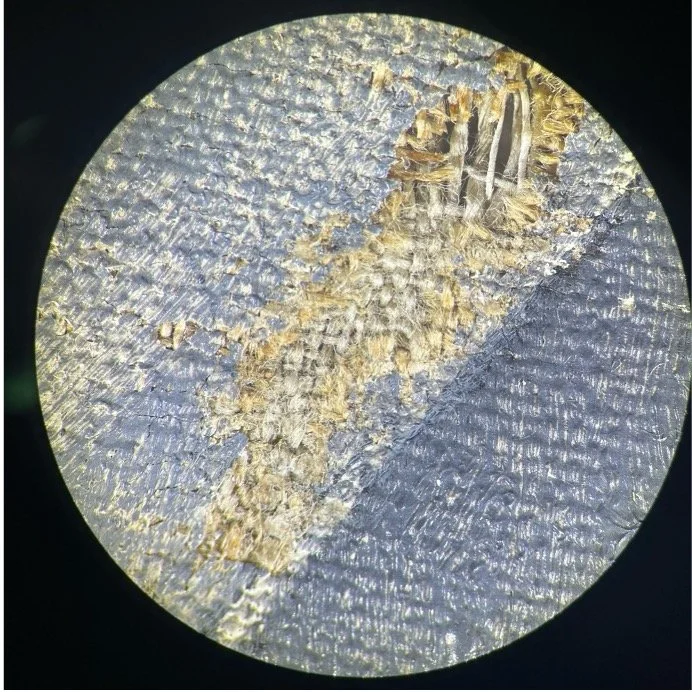
highlights
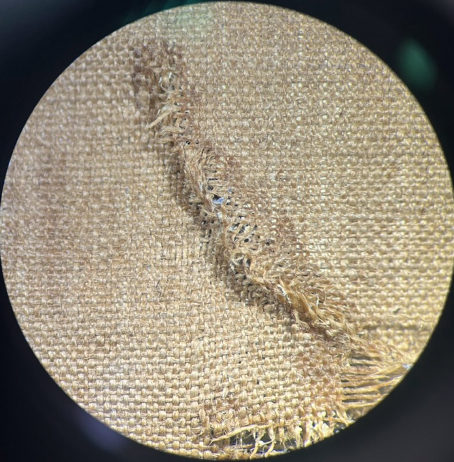
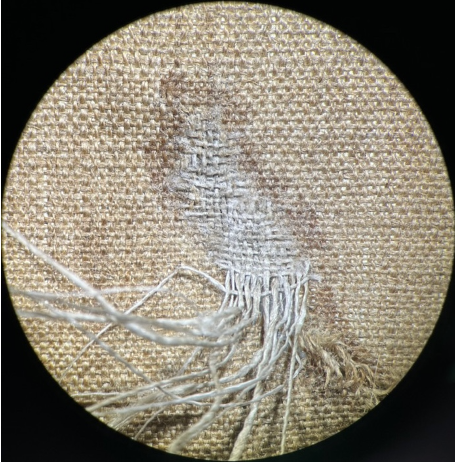
Om beter te begrijpen van welk materiaal het doek is gemaakt en om passende draden te kunnen kiezen voor het herstellen van de scheur, werd een kleine vezelanalyse uitgevoerd.
Uit een los draadje werd een minuscule vezel gehaald en voorzichtig uit elkaar gehaald met fijn gereedschap. De vezels werden onder een gepolariseerde lichtmicroscoop bekeken, zodat hun structuur goed zichtbaar werd. Daarna zijn ze vergeleken met referentievezels uit de Yale McCrone-bibliotheek, zoals vlas, hennep, jute en katoen (zie afbeelding rechts). Katoen en jute konden al snel worden uitgesloten omdat ze duidelijk andere kenmerken hebben.
De vezel van Villon leek sterk op vlas. Niet alleen qua kleur, maar vooral door de smalle, onderbroken lumen, het holle kanaaltje in het midden van de vezel. Bij hennep is dat kanaal breder en minder scherp afgetekend. Dat verschil is een belangrijk herkenningspunt en het wijst er overtuigend op dat het doek van vlas is gemaakt.
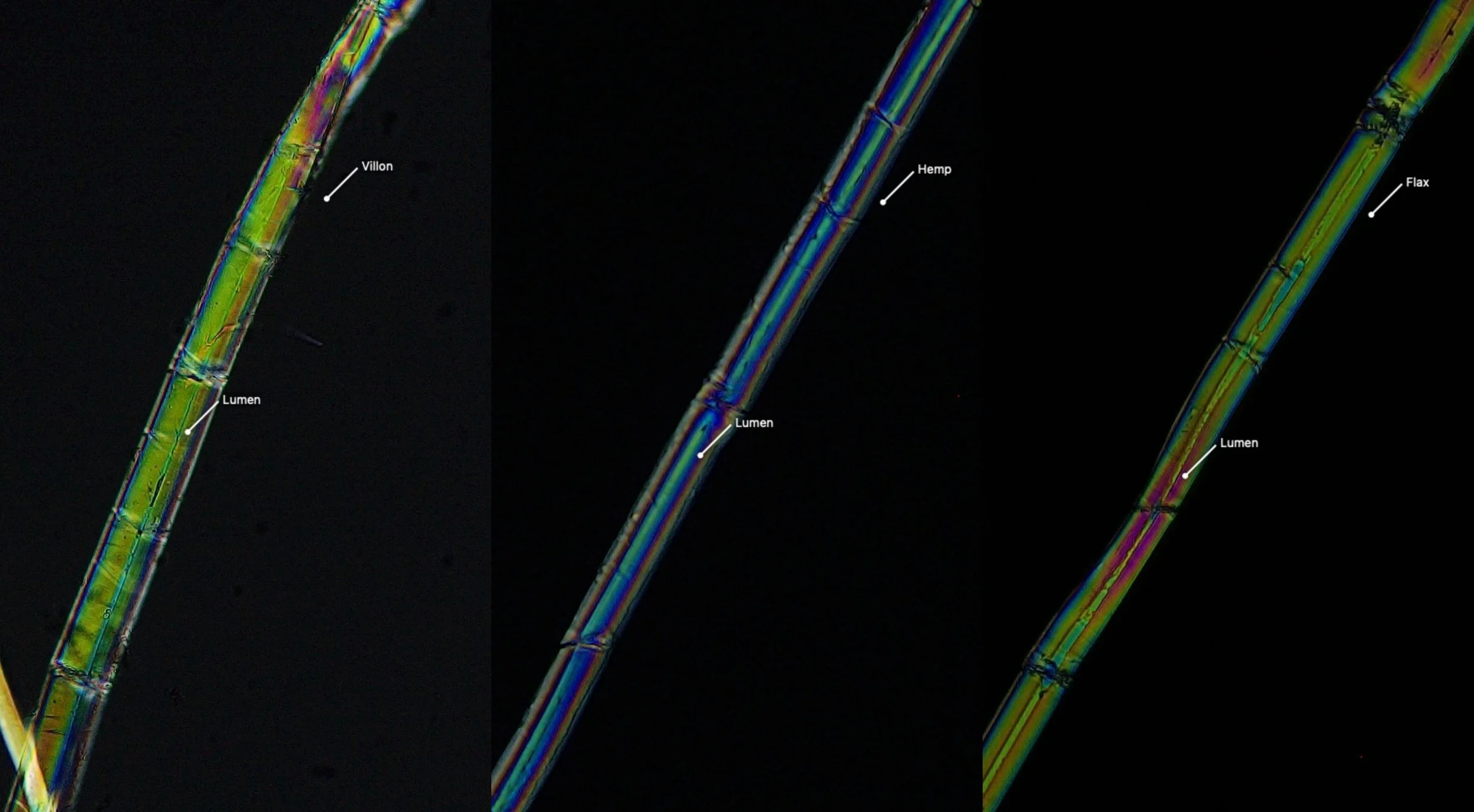
Links: vezel uit Seated Girl Midden: hennep‑referentievezel Rechts: vlas‑referentievezel
Voor het herstellen van de scheur in Seated Girl was het nodig om zowel aan de voor- als aan de achterkant van het doek te werken. Het uitlijnen van de draden kon alleen vanaf de keerzijde, terwijl de beschilderde zijde juist nauwkeurige positionering vanaf de voorkant vroeg. Om te voorkomen dat de originele omslagranden en tangsporen van Villon zouden worden afgevlakt door het doek op een spieraam te plaatsen, is een tijdelijke niet‑hechtende werkdrager ontwikkeld.
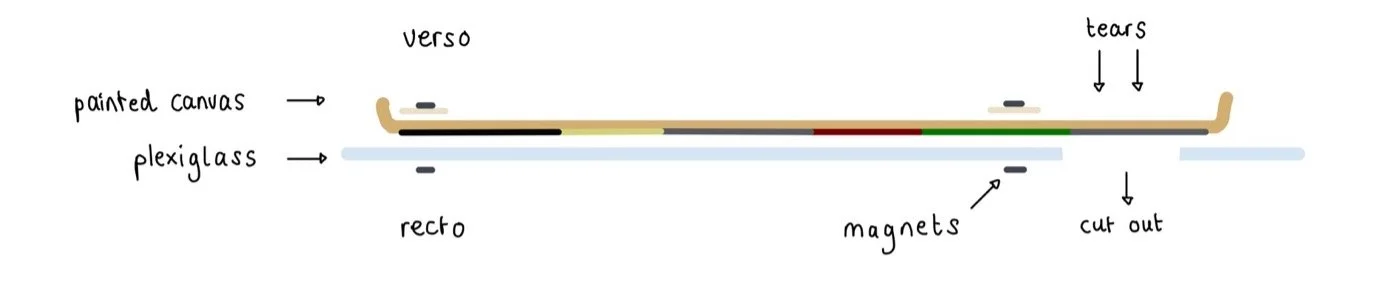
Het doek werd met de verflaag naar beneden op een stijve plexiglasplaat van 4 millimeter gelegd. Dit gaf stabiliteit tijdens het hanteren en maakte het mogelijk het schilderij veilig om te draaien zonder vervorming. Door de transparantie van het plexiglas kon de verflaag tijdens de behandeling worden gecontroleerd zonder het doek telkens om te hoeven draaien. Een uitsparing ter hoogte van de scheur gaf directe toegang vanaf de voorkant. Tijdens het werken aan de rectozijde werden de originele vouwen ondersteund met een op maat gemaakte schuimsteun.
Magneten werden uitsluitend gebruikt tijdens het omdraaien, maximaal tien minuten per keer, om het doek op zijn plaats te houden. Voorafgaand onderzoek liet zien dat magneten op de omslagranden, waar geen verf aanwezig is, geen vervorming veroorzaakten. Elke magneet werd beschermd met blottingpapier en zacht non woven materiaal om indrukken te voorkomen. In totaal zijn acht magneten gebruikt. Rechts is een schematische weergave van dit systeem te zien. Deze aanpak bleek een effectieve en minimaal ingrijpende oplossing.
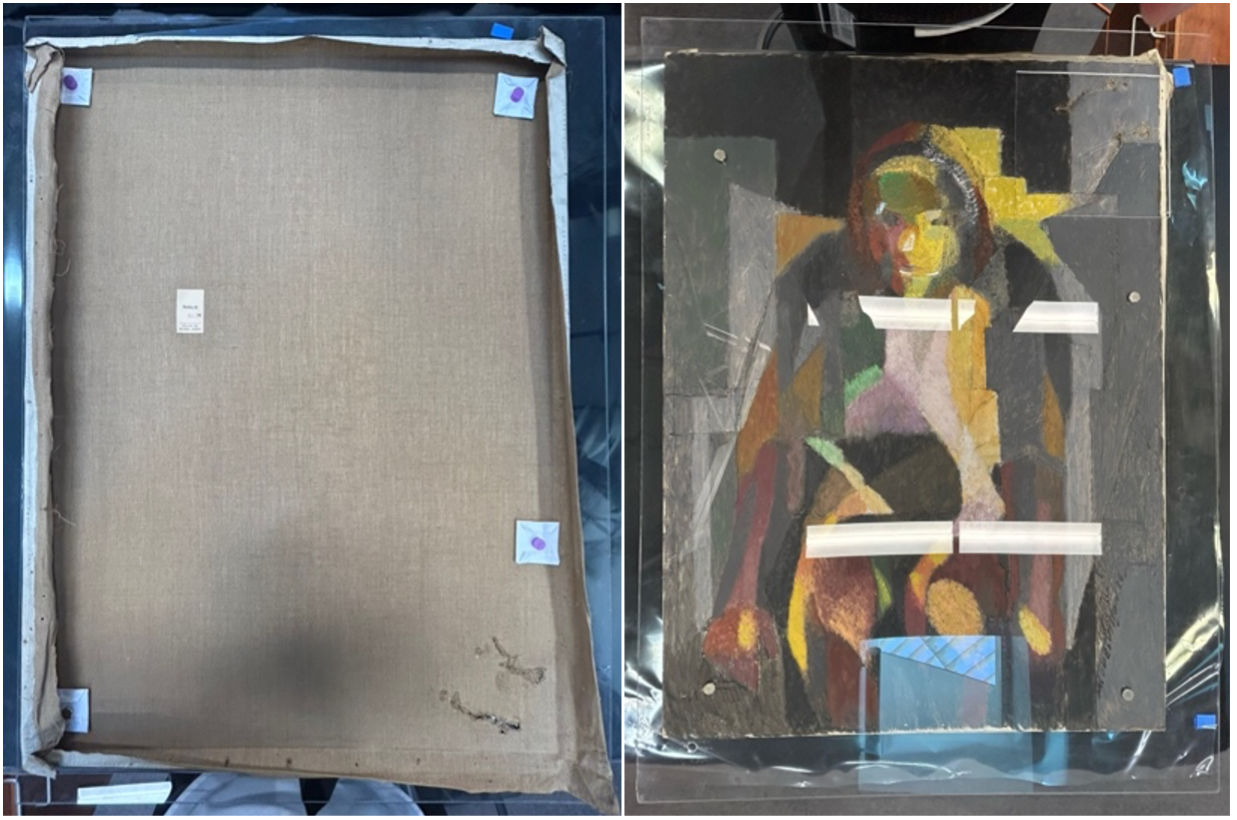
Voor het herstellen van de scheur is gekozen voor een methode waarbij elke draad afzonderlijk wordt teruggebracht in het oorspronkelijke weefsel. Deze nauwkeurige aanpak past goed bij het strak geweven doek en zorgt ervoor dat de structuur en uitstraling van het oppervlak behouden blijven.
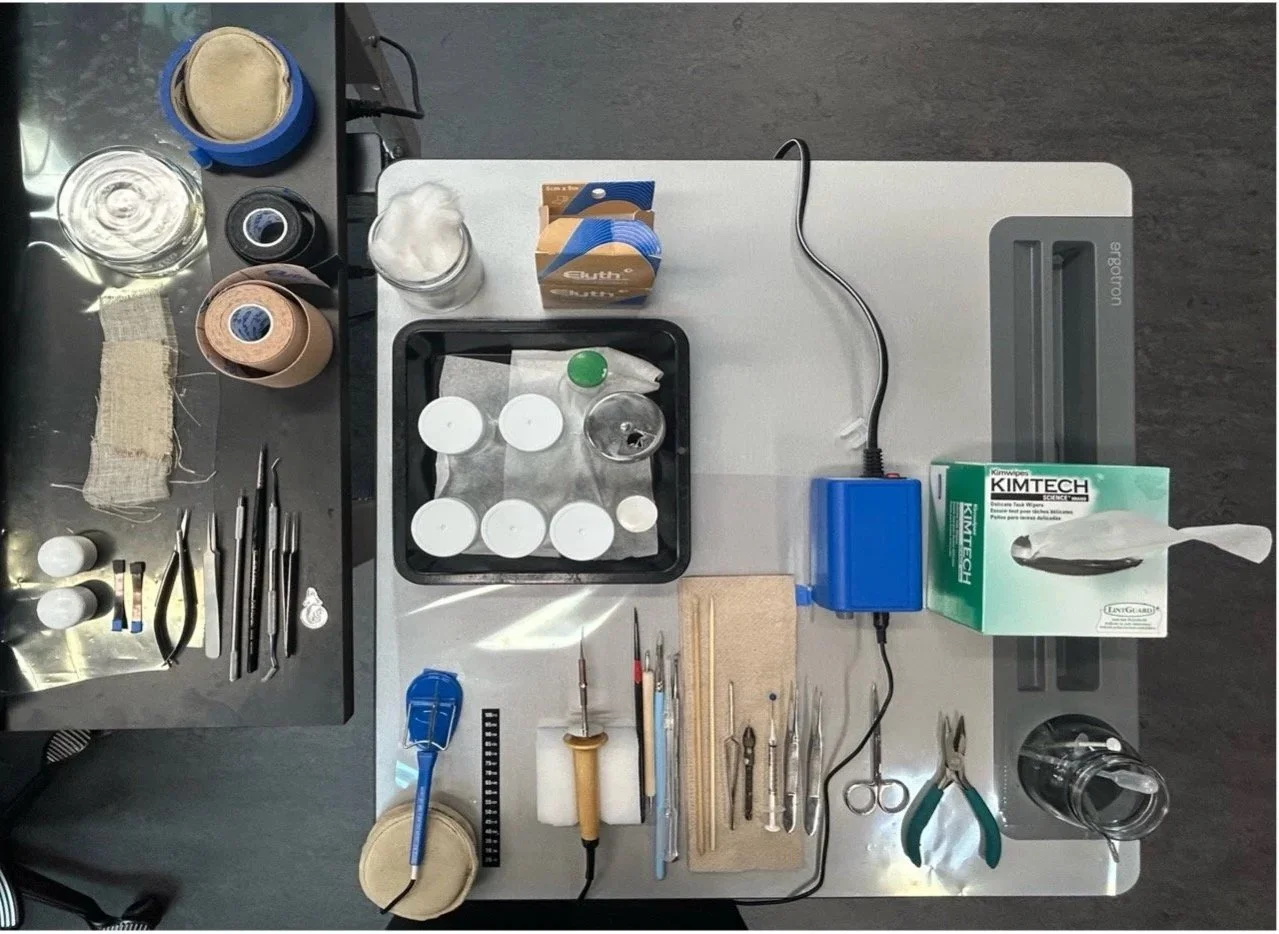
Omdat de randen van de scheur tijdens twintig jaar opslag iets waren verschoven, is kinesiotape gebruikt om ze weer netjes op hun plaats te brengen. Losgeraakte vezels zijn met gedeïoniseerd water teruggeleid naar hun oorspronkelijke positie en ontbrekende draden zijn aangevuld met nieuwe linnen draden. De uiteinden zijn licht bevochtigd voordat de lijm werd aangebracht, zodat ze soepel konden worden verweven met de originele draden in een eenvoudige platbinding. Methylcellulose zorgde voor extra stabiliteit tijdens het werken. Met hete naalden en fijn gereedschap konden de draden nauwkeurig worden gevormd en uitgelijnd (zie afbeelding links).
Sommige originele draden waren te bros en braken tijdens de behandeling. Deze zijn vervangen door nieuwe draden die iets verder in het doek zijn ingeweven, zodat de verbinding sterker en duurzamer werd.